
Last updated November 23, 2026
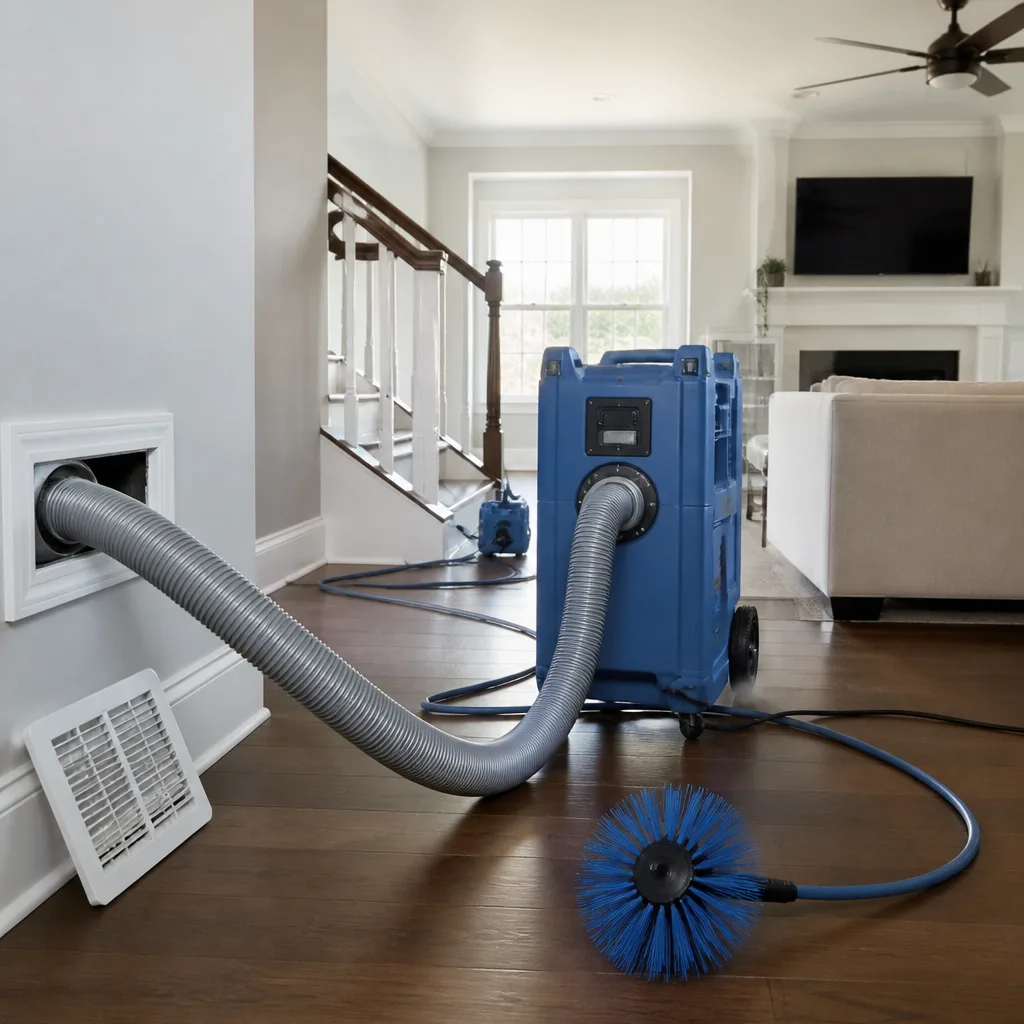 Whole-home duct cleaning
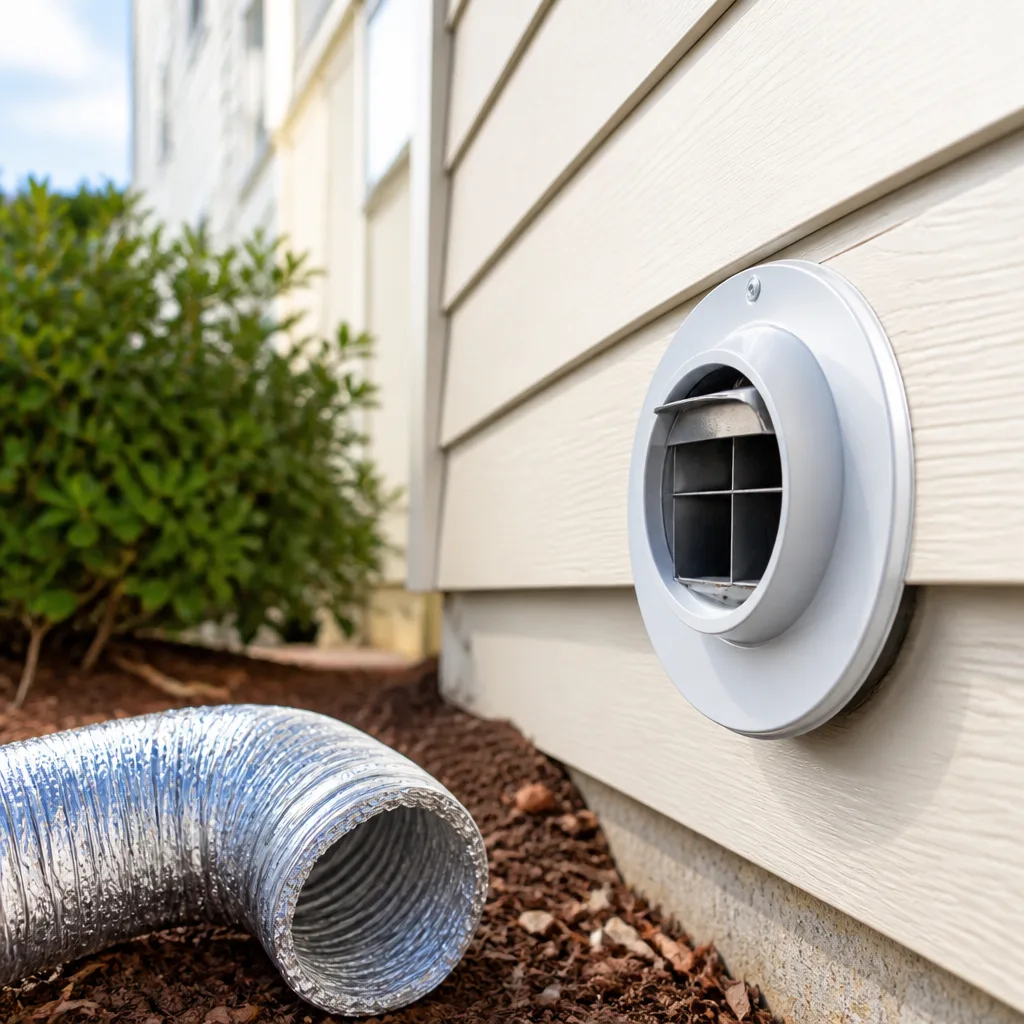 Dryer vent cleaning
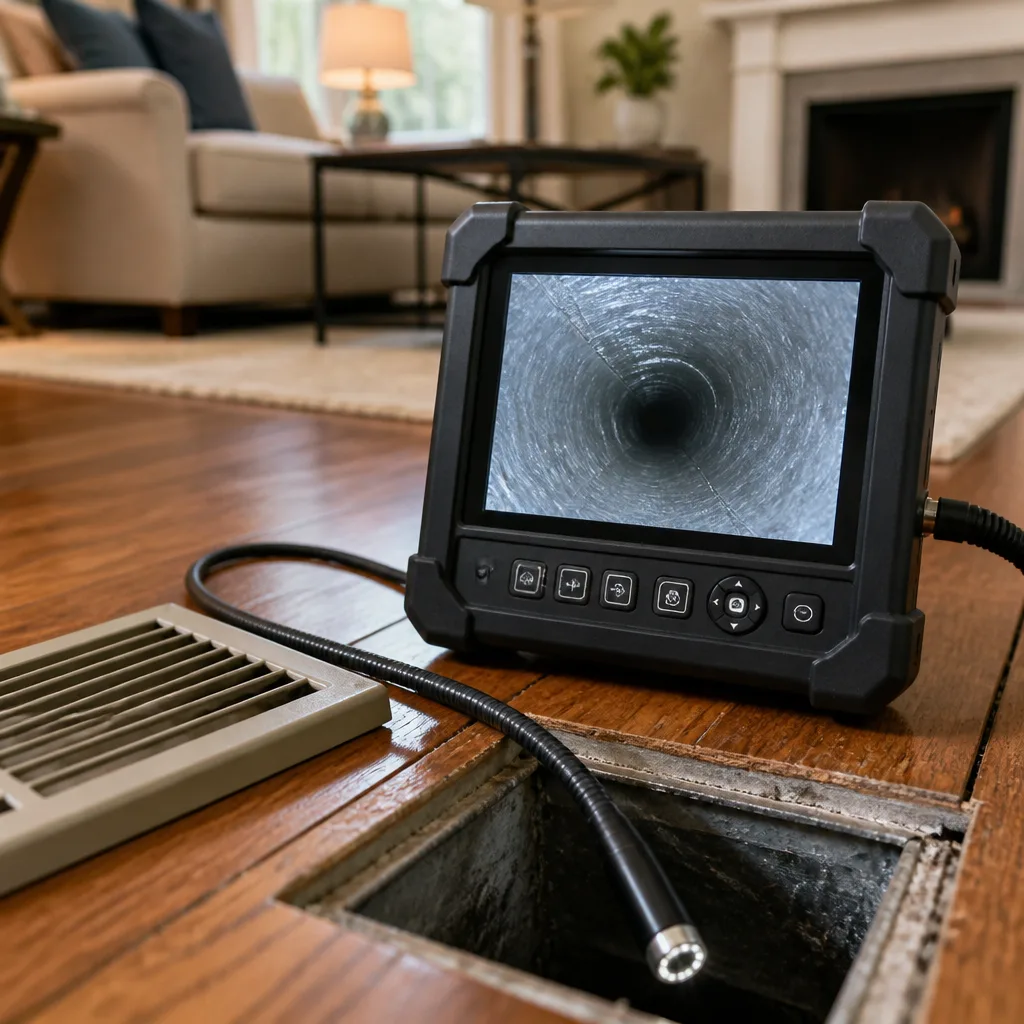 Camera inspection
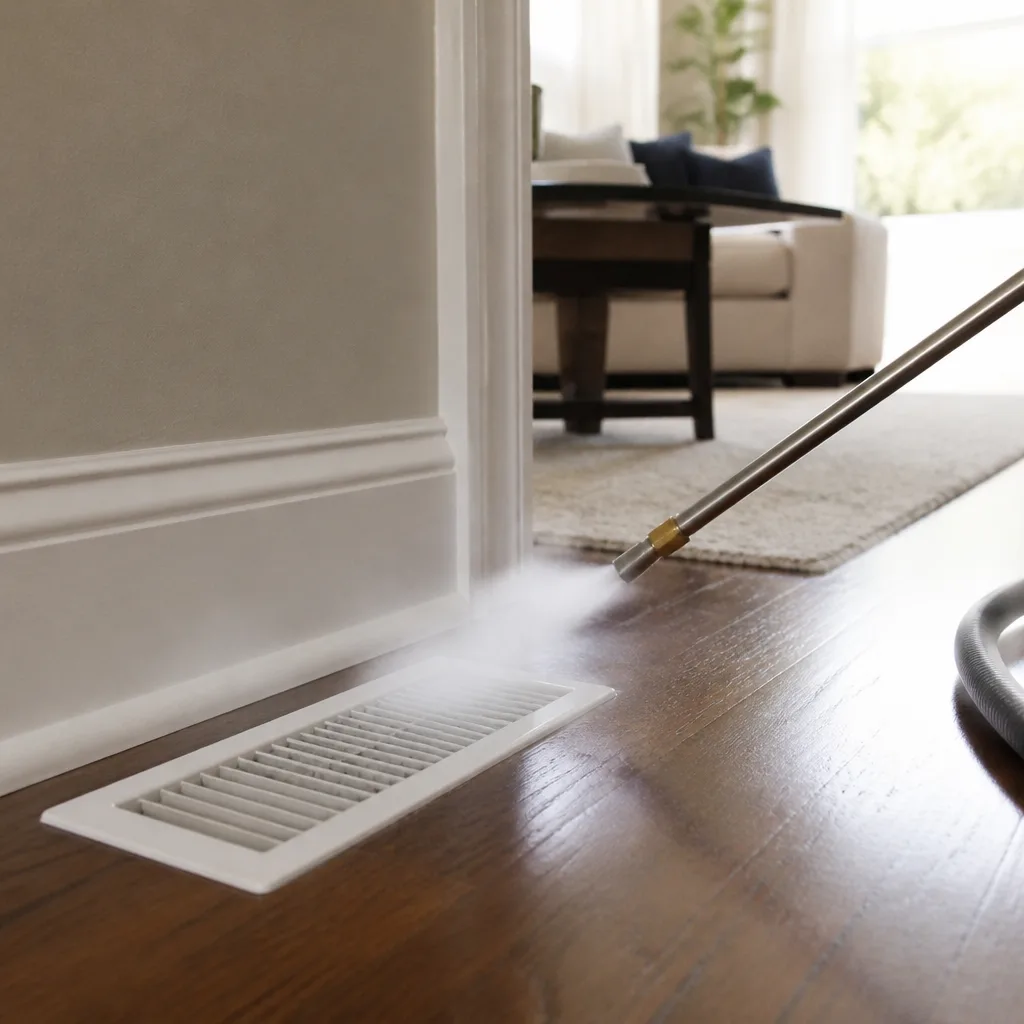 Sanitizing & deodorizing
Whole-system duct and dryer vent check with before-and-after photos - you see exactly what came out of your vents
That "$99 whole-house special" is a bait ad - the real number appears once they are in your hallway, or the "clean" is a shop-vac at the register. We photograph the inside of your ducts before and after instead.
Air Duct Cleaning Maintenance Checklist for Kent Homeowners
If you swapped your MERV-8 filter for a cheap fiberglass panel to “improve airflow,” you re-contaminated your duct system the same day. That thin blue panel traps almost nothing, so every cubic foot of air the blower pulls now carries dust straight past the coil and into the branches feeding your bedrooms. Filters are the fastest-acting maintenance variable in the whole system, and most homeowners treat them as an afterthought. What follows is the sequence that keeps contamination from coming back: the monthly, quarterly and annual tasks, the inspection points that matter between cleanings, and the measurable signs that a professional needs to step in. If you live in Kent and want a system that stays clean instead of one that gets cleaned and then quietly degrades, this checklist is built for you.
Quick Answer
Maintain your ducts by replacing the filter on the correct interval for your home, inspecting accessible joints and return grilles every quarter, and scheduling professional air duct cleaning and inspection periodically based on measurable signs rather than a fixed calendar. In Kent, homes with pets, allergy sufferers, or recent renovation usually need more frequent filter changes and closer monitoring of flex duct runs. Cleaning is one event; the maintenance schedule you keep afterward decides how long the result lasts.
Styles & brands we work with
- Whole-home duct cleaning
- Dryer vent cleaning
- Camera inspection
- Sanitizing & deodorizing
Table of Contents
- Why Duct Cleaning Is a Sequence, Not an Event
- Monthly Tasks: Filters and Airflow
- Quarterly Tasks: Joints, Grilles and Bypass Gaps
- Annual Tasks: The Deep Review
- Choosing a Filter MERV Rating for Your Kent Home
- Return Vent Inspection and Bypass Gaps
- Flex Duct Kinking and Tape Failure
- When the Schedule Has Failed: Measurable Warning Signs
Why Duct Cleaning Is a Sequence, Not an Event
A duct system is a closed loop that never fully stops moving air. Once it’s clean, contamination returns from three sources: filter bypass, joint failure, and interior surface dust that settles when airflow drops. Cleaning resets the baseline; the maintenance sequence determines how slowly it climbs back. In Kent, where many homes sit in older subdivisions and a good share have seen at least one round of renovation, drywall dust and construction debris are a recurring source of that reload. We’ve pulled enough material from systems to know that a single deep clean followed by a neglected filter is a short-lived fix.
The intervals below matter because each task targets a different failure mode, and each fails on a different timeline:
- Filter loading happens constantly. It’s the fastest variable and the one you control most directly.
- Joint and tape failure develops over months as flex duct and taped seams age, flex, and lose adhesion.
- Bypass gaps around return grilles are usually there from installation and get worse as a house settles or a grille is re-set.
- Interior buildup and coil fouling accumulate across seasons and show up as reduced airflow and higher dust loads.
The point is that no single task keeps the system clean. A perfect filter does nothing if unfiltered attic air is bypassing the return grille. New tape does nothing if the filter lets the dust through. Treat the schedule as a set of linked jobs and update your Kent Air Duct Cleaning Pros plan accordingly.
Monthly Tasks: Filters and Airflow
Check the filter every month, even if you plan to replace it less often. The check is fast, and it tells you whether your replacement interval is right for your home. Hold the filter up to a light: if you can’t see light through the media, or the surface is visibly gray, it’s loaded and the blower is working harder than it should be. Replace it on the spot.
Why monthly and not annually? A filter only removes what it catches before the air reaches the ductwork. Once media is saturated, dust begins bypassing or pushing through into the system, and the loading happens faster than most people expect in homes with pets, active yards, or ongoing work. The mechanical reason: a loaded filter increases static pressure on the blower, which pulls less air, which lets more dust settle on duct interiors rather than stay suspended and get caught. The system doesn’t just get dirtier, it gets dirtier faster.
Monthly tasks in Kent homes:
- Inspect the filter and note the load level (light, medium, heavy).
- Replace if heavy load or light-tight.
- Check the return grille for visible dust islands around the edges; rising buildup suggests bypass (see the return vent section below).
- Listen for a change in blower tone or airflow at supply vents; a persistent drop signals a load or a restriction.
- Confirm filter size matches the return opening with no gaps at the frame edges.
During active renovation, this becomes a weekly check. Drywall dust loads media fast, and the sooner you swap the filter, the less ends up downstream.
Quarterly Tasks: Joints, Grilles and Bypass Gaps
Every quarter, walk the accessible ductwork and look at what you can see. This is not a full inspection; it’s a spot check that catches developing problems before they become re-contamination events. On most Kent homes, accessible runs are visible in the garage, the basement or crawlspace, and near the air handler. The attic is often the most productive place to look, especially on older homes where flex duct runs and taped joints have had time to age.
The steps:
- Look at every visible joint for tape lifting at the edges. Tape that’s curling up or separating has already stopped sealing.
- Check flex duct for kinks, sharp bends and crushed sections. Anywhere the duct changes direction sharply, look for a restriction.
- Open the return grille and check the frame-to-ceiling gap. If you can see into a wall cavity or attic, you have bypass.
- Scan for gaps where duct sections meet the plenum, boot or register box; a common failure point.
- Note any dark staining or dust drift near a joint; it’s an aerated leak that’s been pulling unfiltered air.
Quarterly is the right cadence because these failures develop on a seasonal timescale, not in a week. It’s slow enough to be doable and frequent enough to catch a tape failure before it’s been leaking for a year.
Annual Tasks: The Deep Review
Once a year, step back and look at the system as a whole. This is when you decide whether scheduled cleaning is right for your home this year, or whether the checklist tasks have done their job and the system is holding. The annual review covers:
- Full walkthrough of accessible ductwork, including the air handler area.
- Coil and blower compartment check for visible dust buildup (leave the cleaning to a trained professional near live electrical components).
- Condensate line check on the air handler; a clogged line is unrelated to ducts but a common cause of airflow damage if it backs up.
- Dryer vent check, if it’s been a season or more since your last dryer vent cleaning; the vent is a separate system, but it’s part of the same home air picture and the same fire-safety concern.
- A look at humidity control and whether filtration is keeping up (Honeywell and Aprilaire products are common upgrade paths at this step, and worth discussing with a professional).
The annual review is also the moment to look at your HVAC cleaning schedule. Coils, blower, and drain pan belong in the picture, not just the ducts. If the annual inspection shows buildup in the air handler or coil compartment, an HVAC cleaning visit makes sense before the next heating or cooling season puts load on a dirty system.
Choosing a Filter MERV Rating for Your Kent Home
Filter selection is the single variable with the fastest consequence for duct cleanliness. A fiberglass panel filter (MERV 1-4) is essentially a bug and debris screen; it catches almost no fine dust, so the duct system absorbs what it doesn’t. Most Kent homes do better with MERV 8 to MERV 11, and the right rating depends on your specific load and your system’s ability to handle it.
Use these three factors to calibrate:
- Pets. One dog or two cats roughly doubles the fine particle load. Move up a MERV step from where you’d otherwise sit, and expect shorter replacement intervals.
- Renovation activity. Drywall, sanding, and demolition produce the heaviest dust loads a home filter will ever see. Temporarily step up a rating during the work and check the filter weekly.
- Allergy load. If someone in the house has allergies or respiratory triggers, a higher filtration rating matters. That’s also where a whole-home purifier or a better filtration cabinet (Honeywell and Aprilaire lines are standard upgrade paths) earns its place.
Don’t go so high that the system can’t pull enough air through the media. A MERV 16 filter in a system built for MERV 8 will reduce airflow and can cause coil icing. Match the filter to the equipment’s design, not to the filter aisle’s best-sounding number. If you’re not sure of the design limit, ask during your next inspection. Stay away from the temptation to swap in a cheap panel to “improve airflow.” That fix just moves the dust into the ducts.
Return Vent Inspection and Bypass Gaps
Every return grille is a potential bypass. The grille sits against the wall or ceiling, but what’s behind it is a cavity. If the gap between the grille frame and the ceiling or wallboard is not sealed, the blower pulls a share of air from the cavity. In a Kent home with a vented attic or a wall cavity over an unconditioned space, that cavity air is unfiltered and often dustier than the room air it’s competing with.
How to check:
- Remove the return grille (usually a couple of screws or spring clips).
- Look at the gap between the grille frame and the drywall or plaster edge. If any gap is wide enough to see daylight or into the cavity, it’s a bypass.
- Check the duct connection behind the grille. The register box should be sealed to the wall or ceiling; anything loose or unsealed lets attic or cavity air in.
- Note any dust streaks at the grille edges where leaking air has been passing; darkening along a seam is a sign it’s been leaking.
The fix is sealing the gap with appropriate duct sealant, not tape you’d use on a box. If you can see into an attic or wall cavity through the return, that’s a professional job; sealing it wrong is nearly as bad as leaving it. This is one of the most common reasons a system re-contaminates after a cleaning. Get the returns sealed before you spend on another cleaning.
Flex Duct Kinking and Tape Failure
Flex duct is convenient and it fails in predictable ways. Two of those matter most for maintenance:
- Kinking and over-bending. Any bend tighter than the duct’s listed minimum radius creates a restriction. The air slows, dust drops out of the stream and settles, and the run loses pressure. A kinked run isn’t just inefficient; it’s a dust trap.
- Tape failure. Cloth duct tape and even some foil tapes lose adhesion over time as the duct flexes with each heating and cooling cycle. When the tape lifts, the joint opens and the run starts drawing attic or unconditioned air.
During the quarterly check, follow each accessible run and note every bend. If you see a sharp elbow, a crushed segment under a strap, or a section pinched against a joist, mark it. The fix is rerouting to a gentler bend or replacing a damaged section, not taping over it. On joint failures, some sealing will hold, but if the duct itself is torn, repair means replacement of that run.
Duct repair and sealing is part of what we do, so if you find these issues during your own inspection, you don’t need a separate contractor to fix them. That matters in Kent, where older homes often have the original flex runs and a few taped joints that have simply aged out.
When the Schedule Has Failed: Measurable Warning Signs
Don’t rely on a smell test or a hunch. There are measurable signs that the maintenance schedule has fallen behind and professional cleaning is overdue:
- Visible dust on supply vent faces within a week or two of cleaning them. That’s fresh dust arriving from upstream.
- Dust streaks at duct joints or around return grilles. Aerated leaks that have been running long enough to stain.
- Filter loading dramatically faster than your normal interval. A system that wasn’t loading fast a month ago now is.
- Airflow drop at supply vents you can feel by hand. Not a guess; compare it to a known-good vent in the same zone.
- Persistent dust on horizontal surfaces in rooms you clean regularly. Fine dust circulating instead of being captured.
- A visible dust ring around the return grille frame that widens over time.
Any one of these is a trigger to bring in a professional. Two or more means the schedule has been slipping and the system needs a full air duct cleaning plus a containment-based inspection.
The reason containment matters at this stage: once a system has significant buildup, cleaning without negative air pressure just moves the dust into the living space. Our technicians use Abatement Technologies equipment to hold the work area under negative pressure, and purpose-built Rotobrush and Nikro systems to clean the ducts themselves. That is the difference between a cleaning that relocates dust and one that removes it.
Common Mistakes to Avoid
- Swapping in a cheap fiberglass panel to fix airflow. This is the fastest way to re-contaminate a clean system. Those panels trap almost nothing, and the dust that passes through settles in the ducts.
- Sealing duct joints with the wrong tape. Standard cloth duct tape loses adhesion quickly. If a joint needs sealing, use duct sealant or a purpose-made foil tape rated for HVAC.
- Cleaning the ducts without fixing the bypass. If a return grille is pulling attic air, a fresh cleaning will re-contaminate as fast as the blower can run. Seal first, clean second.
- Skipping the dryer vent because it’s “a different system.” In Kent, and everywhere else, lint accumulation in the vent is a fire risk that’s independent of duct cleanliness. It needs its own schedule.
- Assuming a professional cleaning has a fixed multi-year reset clock. It doesn’t. The interval depends on your filter discipline, the state of your joints and returns, and your home’s dust load.
- Hiring on price alone. A crew without containment equipment can spread the contamination through the house. Ask what equipment they use before you book.
- Ignoring the air handler and coil. Ducts can be clean while the coil compartment is fouled. If the blower is moving air through a dusty coil, the ducts get dirty again.
See the difference
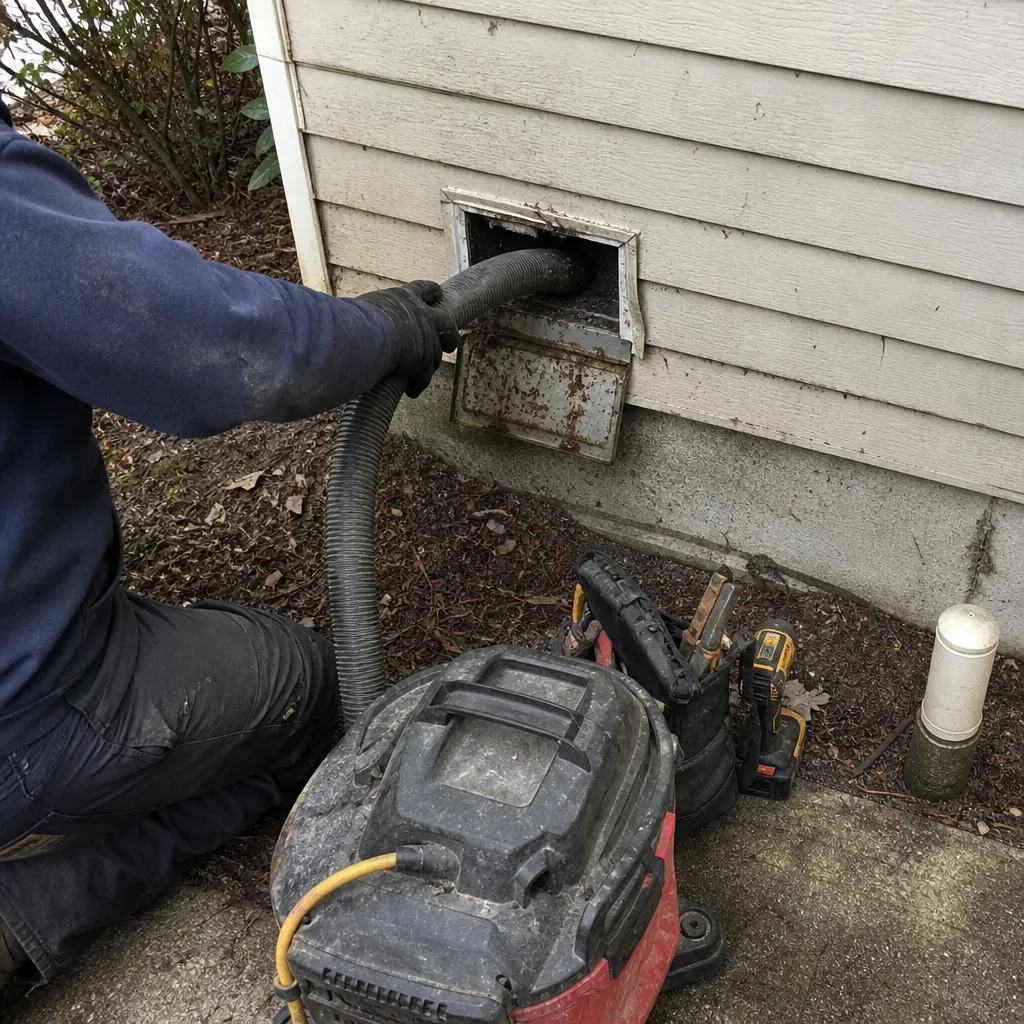 Before
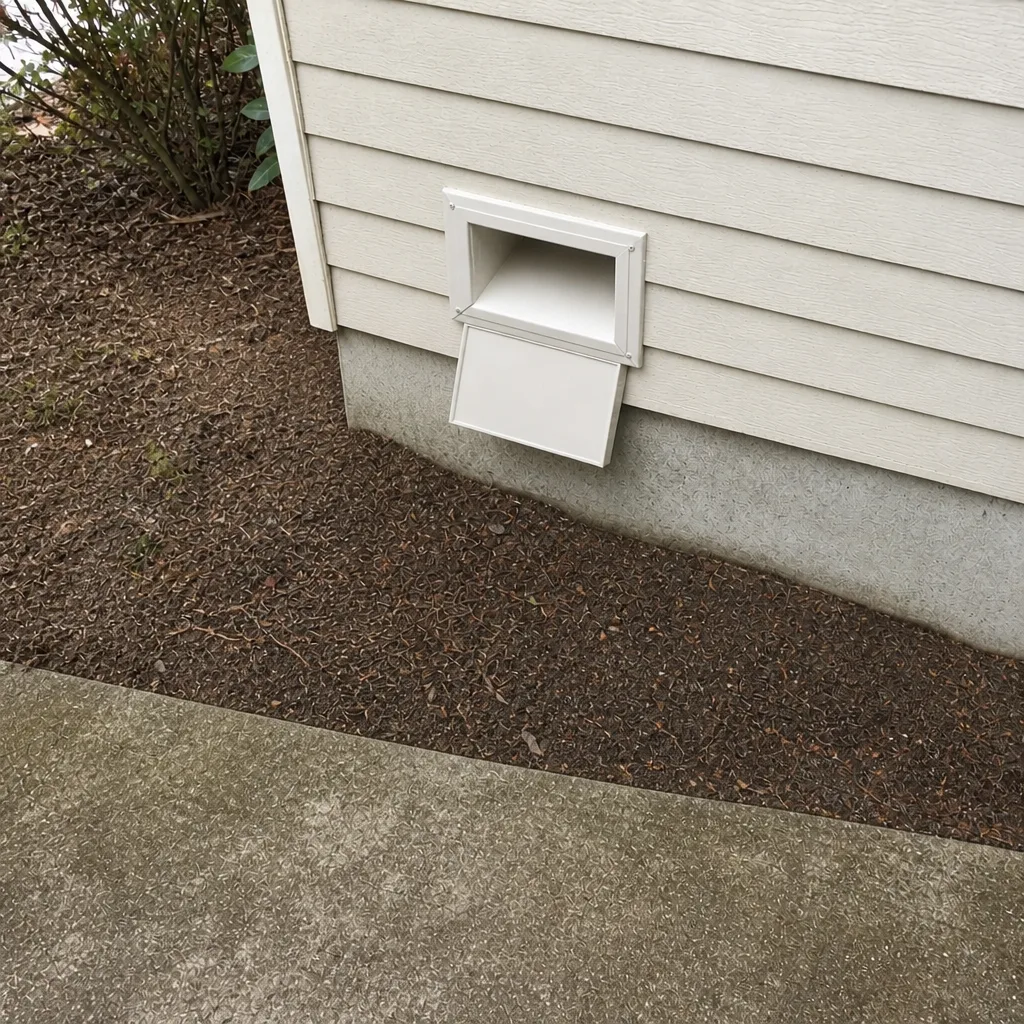 After
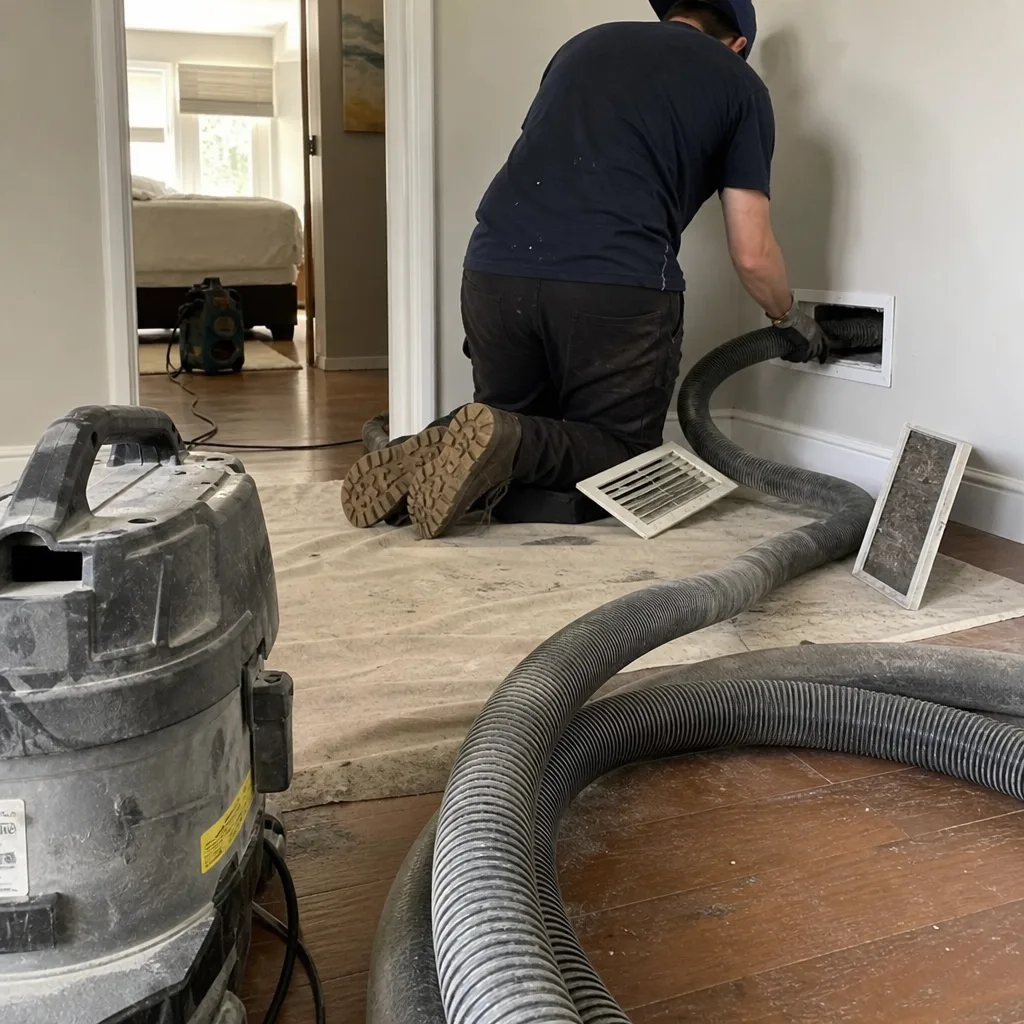 Before
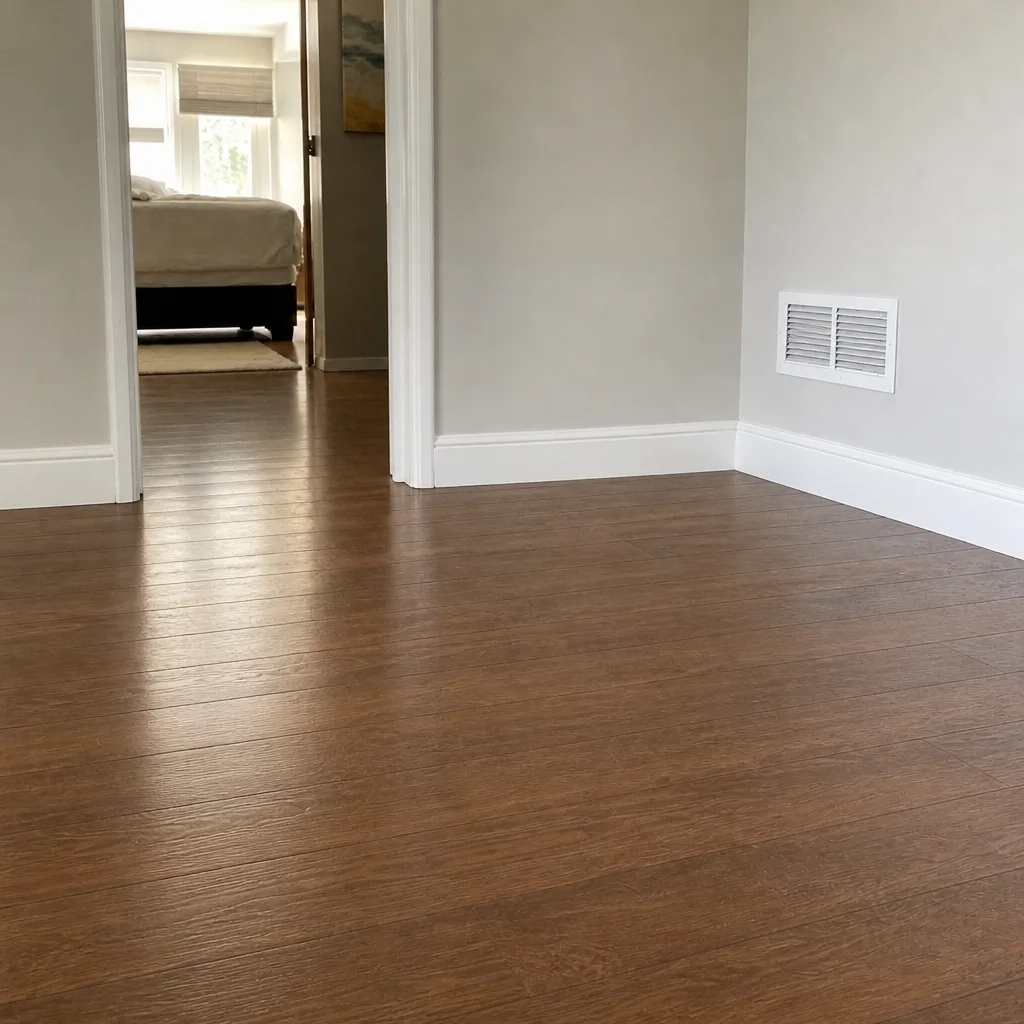 After
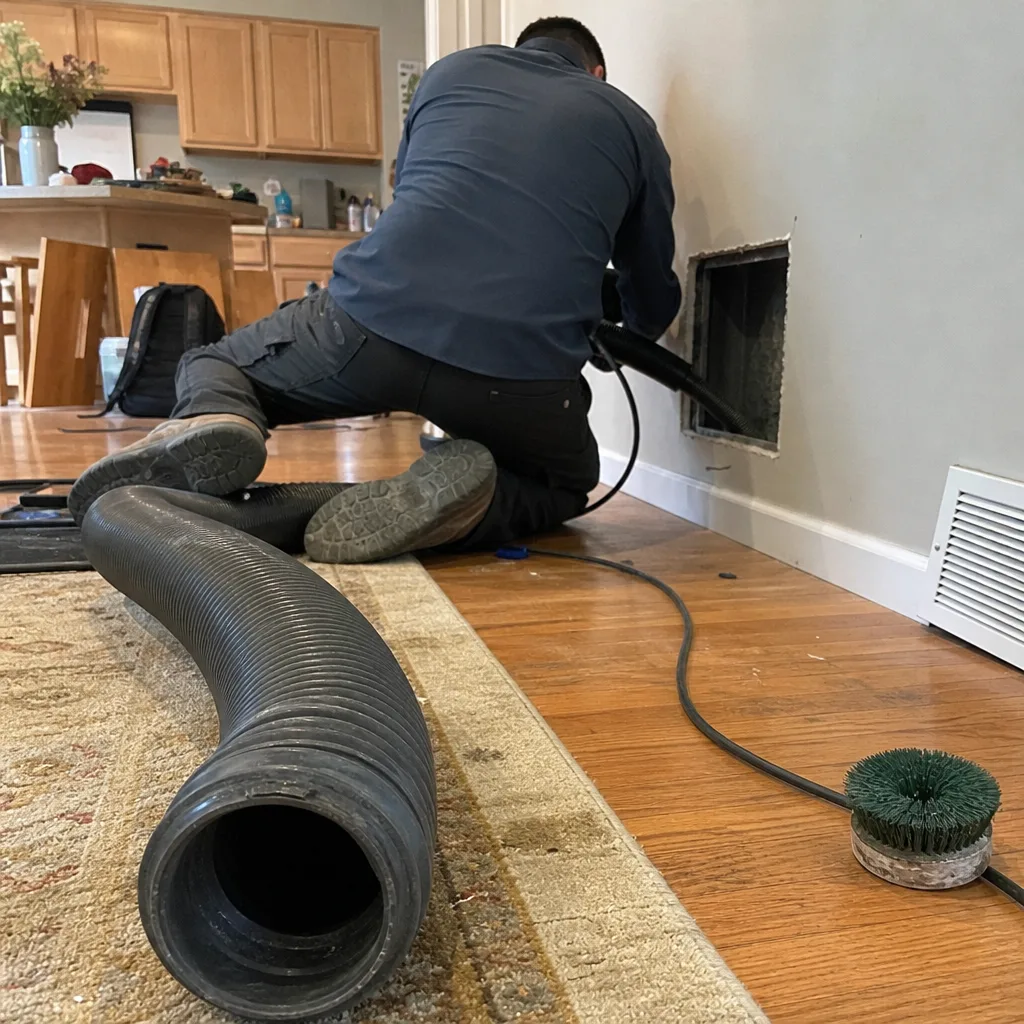 Before
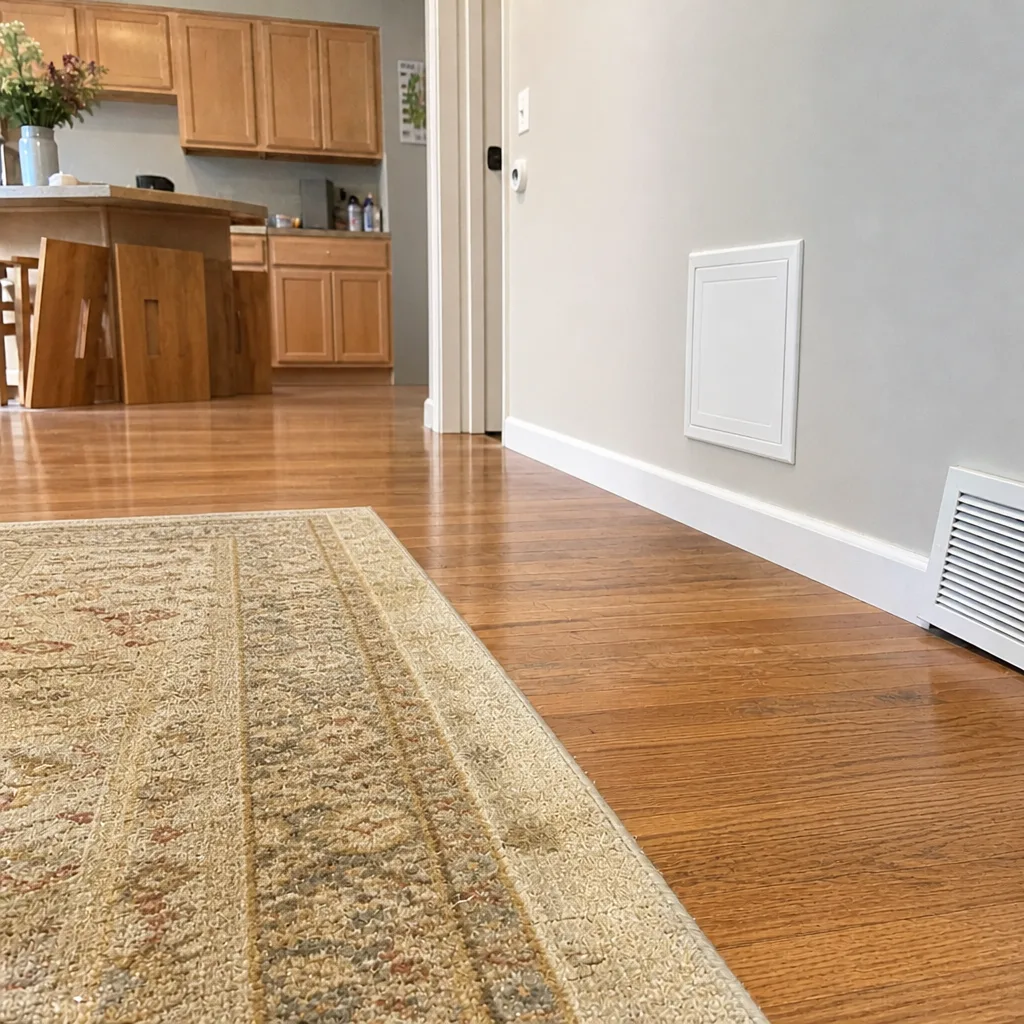 After
When to Call a Professional
Bring in a professional if you find two or more of the measurable signs above, if a return grille shows a bypass into a wall cavity or attic, or if a flex duct run has visible damage. The same applies after a major renovation: drywall dust gets everywhere, and a system-wide cleaning is the right move once the work is done. A dryer vent that’s been running lint-heavy for a season or more also warrants a check, especially if you’ve noticed the dryer taking longer to finish a load. If you’re in Kent and unsure whether your system needs cleaning or just better maintenance, a professional inspection answers that better than a schedule alone.
Kent Air Duct Cleaning Pros offers free estimates in Kent – call (855) 550-7709. Our technicians have up to 13 years of experience, and we use professional-grade equipment including Rotobrush, Nikro, and Abatement Technologies systems. We answer 24/7. Fast dispatch from 7am to 7pm, Sunday through Friday, closed Saturday.
Frequently Asked Questions
There’s no single fixed interval that fits every Kent home. The honest answer is that cleaning should be triggered by measurable signs (visible dust re-accumulating on vent faces, elevated filter loading, dust streaks at joints) plus specific events like a major renovation or a move into a previously occupied home. A home with a tight filter routine and sealed returns often goes much longer between cleanings than one with ongoing filter bypass. A proper inspection tells you which situation you’re in.
Not always. A filter that’s too restrictive for the equipment starves the blower of airflow, which lets dust settle in the ducts and can put stress on the system. Most Kent homes do best in the MERV 8 to MERV 11 range, adjusting up for pets, allergy load, or renovation. Match the rating to what the system is designed to handle.
Air duct cleaning in Kent is priced per system, by estimate, after an inspection. The price depends on system size, number of runs, how heavy the buildup is, and whether repair or sealing is part of the work. That’s why a range estimate on the phone is more honest than a fixed number, and why we price after seeing the system. Call (855) 550-7709 for an exact quote – estimates are free.
Usually because the scope is narrower than it looks. A low quote may cover a partial cleaning without containment, skip the air handler and coil, or price per vent and then add charges on site. The equipment matters too: Rotobrush and Nikro systems with Abatement Technologies containment do work a shop vacuum can’t. Ask what’s included and what equipment they use before comparing numbers.
Ask for before-and-after photos of your own ducts, not stock images. A professional should be willing to show you the work and explain the equipment used. Sealing and repair should be verifiable after the visit. If a company can’t show you what was done, that’s your answer.
Both, on separate schedules. The dryer vent is a fire-safety system that runs lint lint straight through the building envelope. Neglected dryer vents are one of the leading causes of residential fires, and the buildup follows a different clock than duct contamination. If it’s been more than a season, schedule dryer vent cleaning separately.
The Bottom Line
Duct cleaning is one task in a maintenance sequence, not a reset button. The sequence looks like this: monthly filter checks, quarterly joint and return inspections, annual deep reviews, and professional cleaning triggered by measurable signs rather than habit. The biggest variable is filter selection; the biggest mistake is skipping return-bypass checks, which undo the cleaning the day after it’s done. Kent homeowners who keep the sequence do better than those who schedule one deep clean and hope. Our full-system approach covers cleaning, sealing, HVAC cleaning, dryer vent work, and air quality upgrades with Honeywell and Aprilaire products, so one call handles it. Call (855) 550-7709 for a free estimate.
Written by the team at Kent Air Duct Cleaning Pros.