
Last updated November 23, 2026
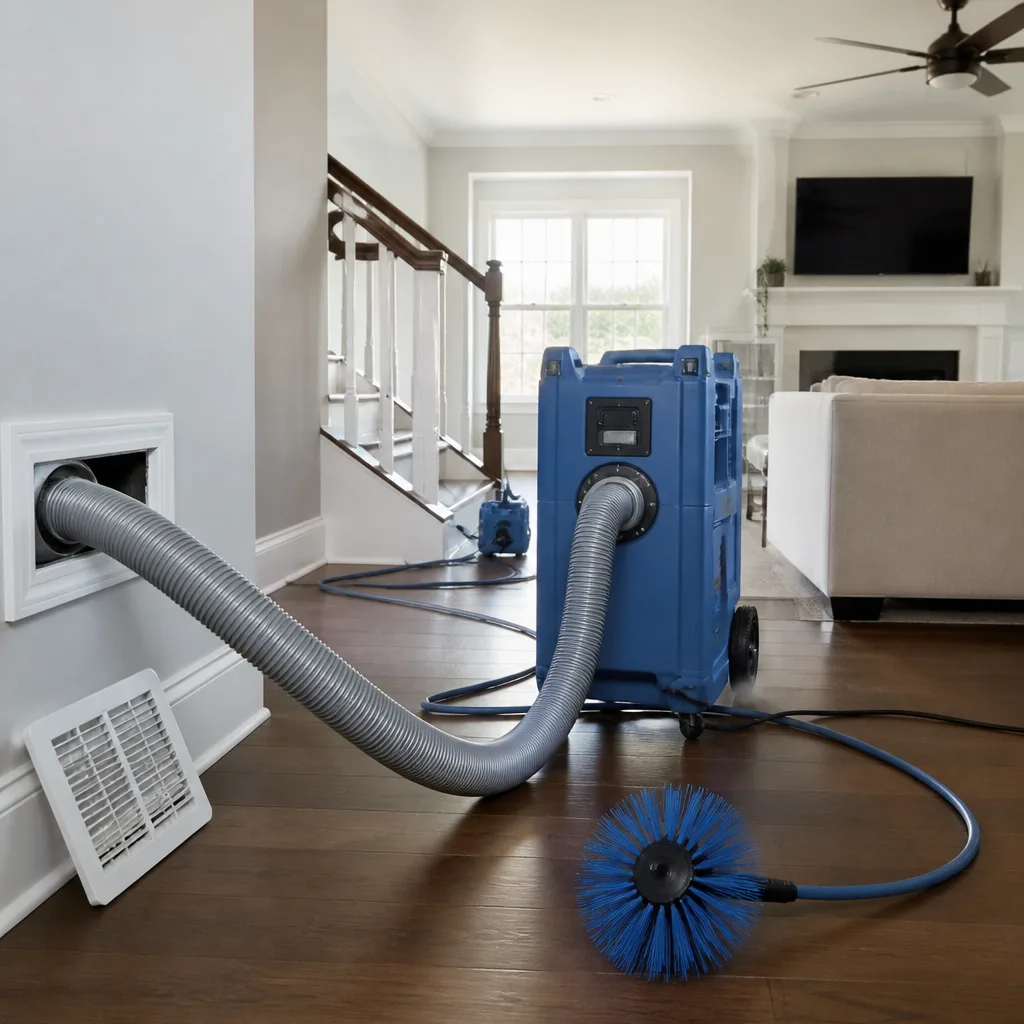 Whole-home duct cleaning
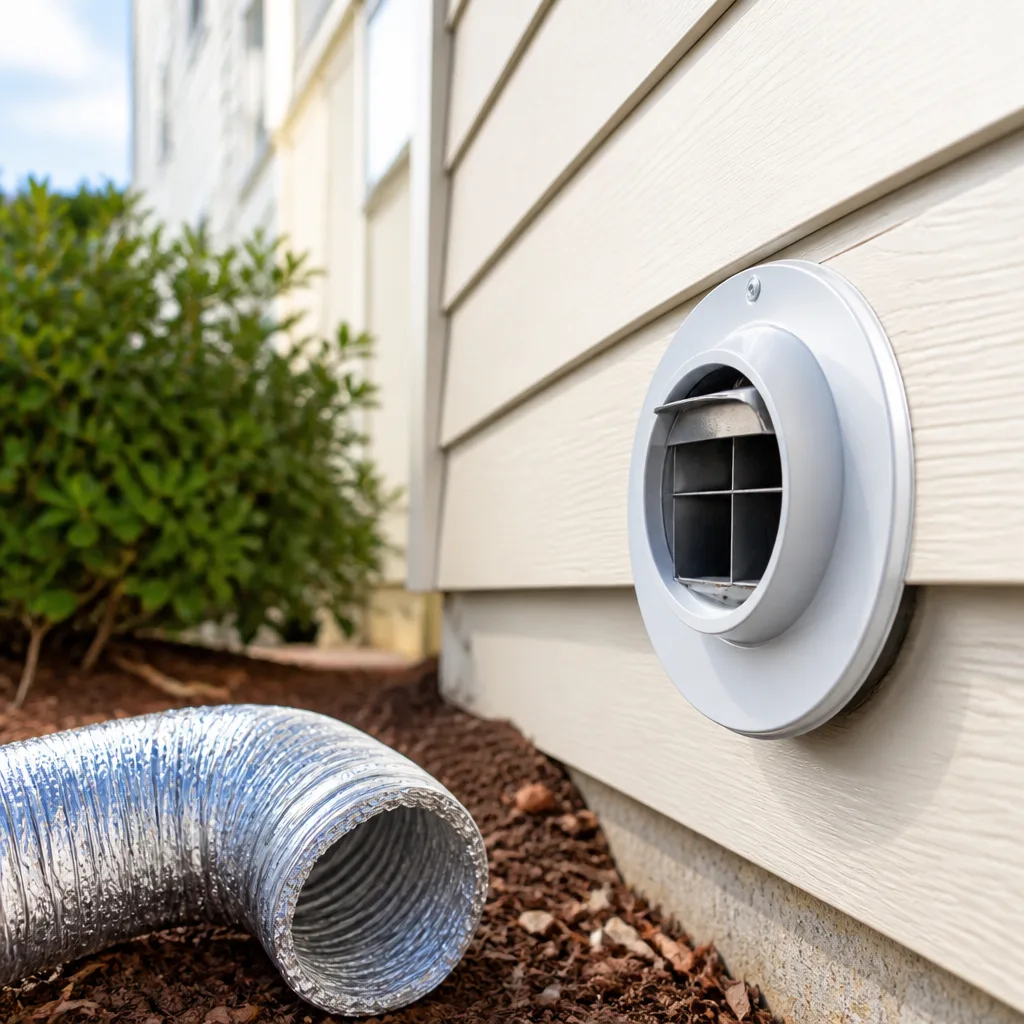 Dryer vent cleaning
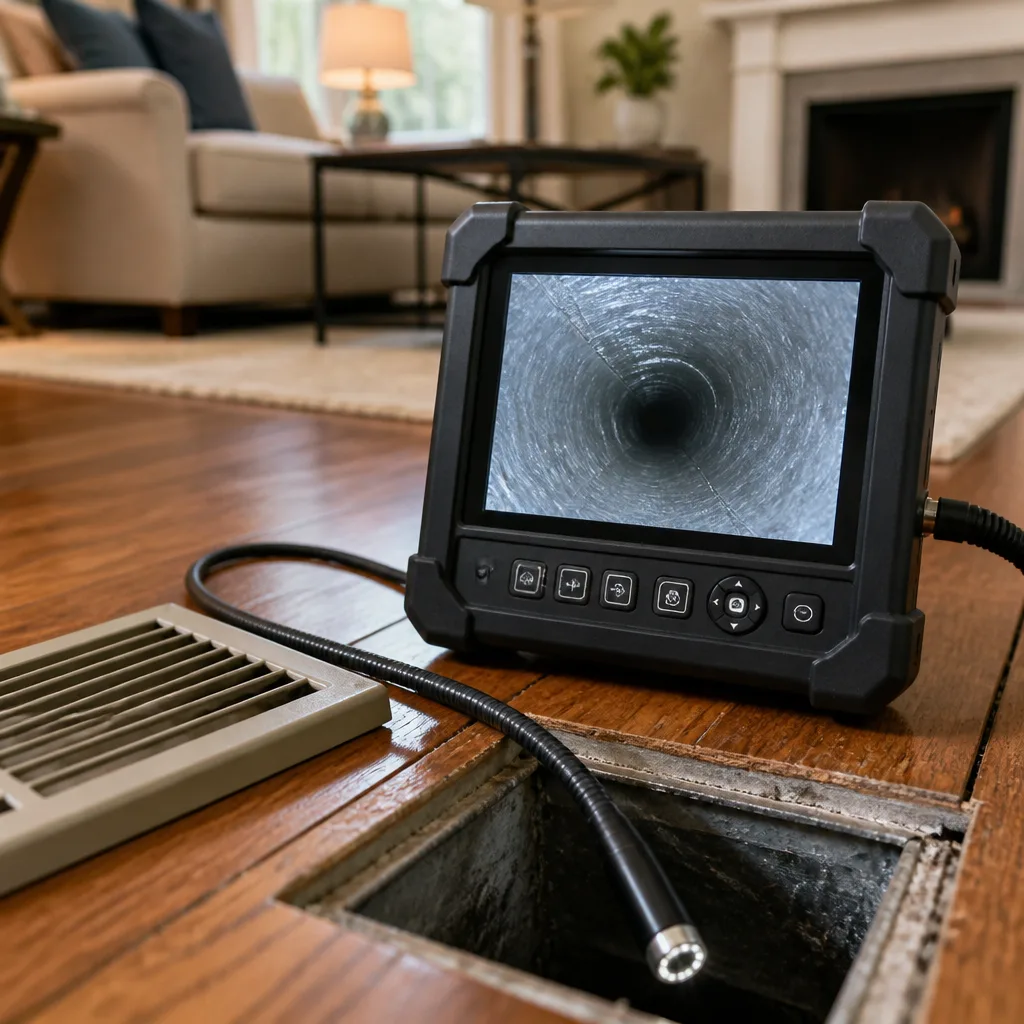 Camera inspection
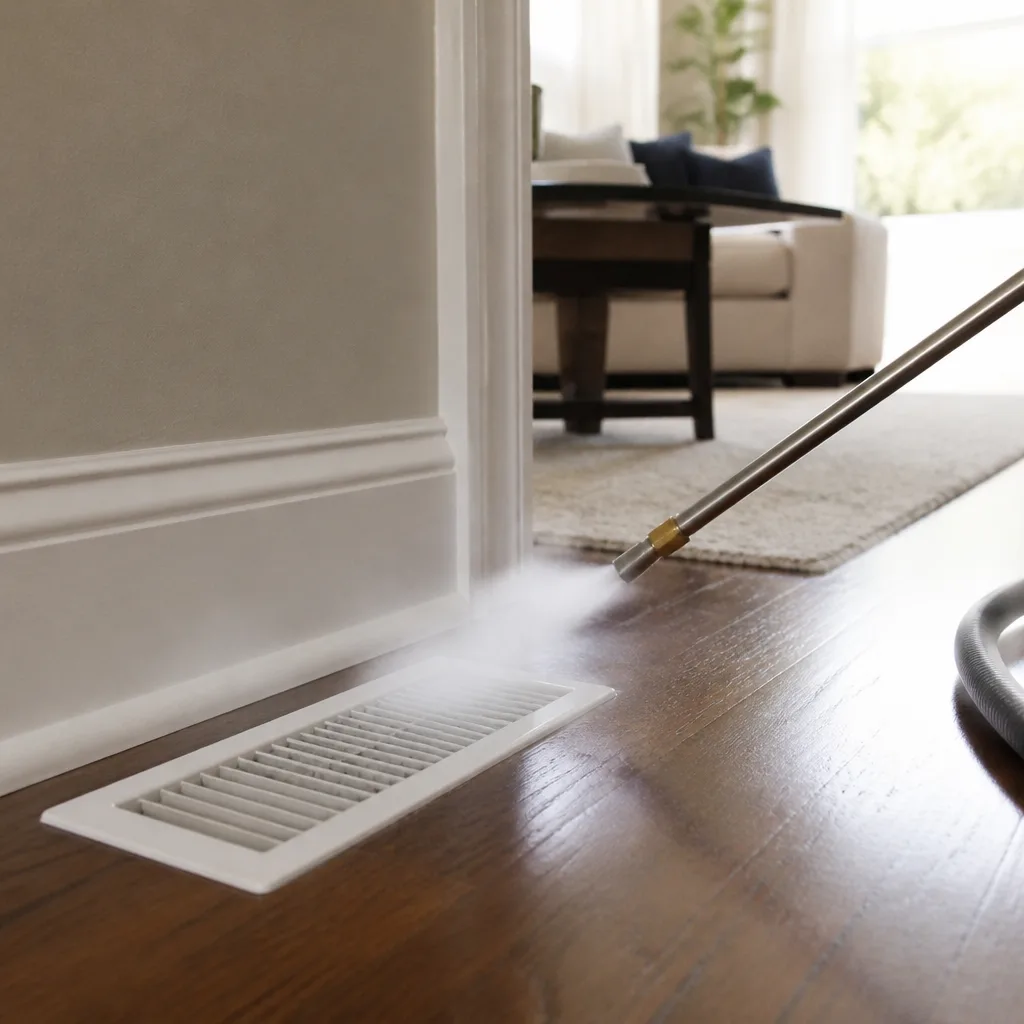 Sanitizing & deodorizing
Whole-system duct and dryer vent check with before-and-after photos - you see exactly what came out of your vents
That "$99 whole-house special" is a bait ad - the real number appears once they are in your hallway, or the "clean" is a shop-vac at the register. We photograph the inside of your ducts before and after instead.
Air Duct Cleaning Troubleshooting in Kent: Common Problems and How to Fix Them
If your HVAC tech has “tuned up” your system twice in three years and you’re still uncomfortable in certain rooms, the furnace was never the problem. The ducts were. Most homeowners in Kent treat weak airflow, uneven temperatures and lingering odors as equipment failures, so they keep paying for tune-ups that fix nothing. This guide maps each symptom to its actual mechanical cause: collapsed flex duct, blocked registers, undersized returns, leakage, imbalance. You’ll learn how to tell these apart, which fixes apply, and what a technician should be measuring to confirm the job is really done.
Quick Answer
Most duct problems in Kent come down to one of five causes: crushed or disconnected flex duct, blocked or closed registers, an undersized return, leaks at joints and boots, or airflow imbalance between branches. Each has a distinct symptom and a different fix. A technician confirms the diagnosis with static pressure and airflow readings before and after the repair, not by feel. Musty smells after cleaning usually mean the sanitizing step was skipped, or the ducts were never fully dried – which matters more in Kent’s humid months than in drier parts of the country.
Styles & brands we work with
- Whole-home duct cleaning
- Dryer vent cleaning
- Camera inspection
- Sanitizing & deodorizing
Table of Contents
- Symptom-to-Cause Mapping: What Your Ducts Are Telling You
- Weak Airflow From Specific Vents: Three Different Causes
- Musty Smells After Cleaning: What Actually Went Wrong
- Uneven Room Temperatures: Balancing Versus Leakage
- The Readings That Prove the Problem Is Fixed
- Kent’s Humidity and Duct Moisture
- Dryer Vents: A Separate System, A Separate Risk
- Common Mistakes to Avoid
Symptom-to-Cause Mapping: What Your Ducts Are Telling You
Duct problems speak in symptoms. Weak airflow is not the same as no airflow; a musty smell is not the same as a dusty smell; a cold room is not the same as a warm one. Each points at a different component. Start by writing down what you notice: which rooms, which vents, when it’s worst, whether it changes with the season. That list is the diagnostic map a technician works from.
The most common patterns we run into in Kent homes:
- One vent weak, rest fine – usually a crushed or disconnected flex run feeding that room, or a register blocked by furniture, carpet or a closed damper.
- All vents weak, system runs long – often an undersized return, a clogged filter, a blower issue or a collapsed trunk line.
- Cold in one room, hot in another – either an airflow balancing problem (dampers set wrong) or leakage pulling conditioned air out before it reaches the room.
- Musty smell in one or two rooms – moisture in a duct run, a disconnected run drawing air from a crawlspace or attic, or microbial growth that survived a partial cleaning.
- Dust settling fast after cleaning – leaks at joints and boots pulling unfiltered air in from unconditioned space.
The temptation is to guess and call a technician to “look at it.” Better: describe the pattern when you call. A technician who knows the symptom in advance shows up with the right meter and looks in the right place first. That shortens the visit and reduces the chance of a misdiagnosis.
Weak Airflow From Specific Vents: Three Different Causes
A single weak vent points at one of three mechanical problems, and only one of them involves the furnace. Get the diagnosis right and the repair is usually straightforward.
1. Collapsed or disconnected flex duct
Flexible duct in attics, crawlspaces and joist bays is easy to crush. A run that got stepped on during a remodel, kinked at a tight turn, or pulled loose from its collar will starve the room it feeds. The vent feels weak because the duct behind it is pinched or open to the attic. This is common in Kent homes with attics that get work done above the ceiling. Fix: re-run the section, support it properly and reconnect it to the collar with mastic and a zip tie, not tape alone.
2. Blocked or closed registers
Check every register in the affected room before calling anyone. Furniture pushed against a floor register, carpet grown over a vent, or a damper closed during a previous season can all mimic a duct problem. It sounds obvious, and it is the most common cause of “sudden” airflow loss we see.
3. Undersized return
If the affected room is far from the air handler and every vent in the house feels a little weak, the return may be too small for the system. A starved return drops static pressure, and the blower cannot push the airflow the system needs. Fixing it means adding return capacity or upsizing the existing return – a bigger job than swapping a filter, but it solves the underlying cause instead of treating the symptom.
If you want the full system looked at rather than one vent, our air duct cleaning service starts with an airflow assessment so we can tell you which of these three you’re facing before any work starts.
Musty Smells After Cleaning: What Actually Went Wrong
A musty smell right after a duct cleaning is almost never a cleaning failure. It is usually a missing step: sanitizing, or drying. Here’s how to tell which one, and what to do about it.
- Smell appears within hours, fades over days – normal off-gassing from loosened debris, or a small amount of residual moisture. Usually harmless if the duct was properly dried.
- Smell gets stronger over the first week – moisture was left behind. Ducts that were wet-cleaned or fogged without full drying give microbial growth a foothold.
- Smell is concentrated in one or two rooms – a specific run likely had a wet spot or a disconnected section drawing attic or crawlspace air.
- Smell is sharp and chemical – a sanitizer was used and not fully ventilated; usually fades, but worth mentioning to whoever did the work.
The fix in each case: a moisture check first, then a proper drying cycle, then a sanitizing treatment on the interior surfaces. If a company cleans and leaves without sanitizing, the smell problem is not solved – it’s just waiting for the next humid stretch. Sanitizing is a distinct step with its own purpose, and it should be part of the conversation before work starts, not an upsell tacked onto the invoice.
Uneven Room Temperatures: Balancing Versus Leakage
Two rooms on the same floor, same thermostat setting, five degrees apart. Is it an airflow balancing problem or a leakage problem? The answer determines the repair, and getting it wrong is why some homes get “fixed” twice.
Balancing problem
If the supply dampers at the trunk are set unevenly, or one branch gets more duct run than another, some rooms will always be over- or under-served. The furnace and duct are fine; the air is just being routed wrong. Fix: adjust the balancing dampers at the trunk, retest airflow at each register, and only then touch anything else. This is the cheapest fix and it’s checked first.
Leakage problem
If the duct system is leaking, conditioned air escapes into the attic or crawlspace before it reaches the room. The symptom looks like a balancing problem – a room that never gets enough air – but the cause is different. Fix: seal the joints, boots and penetrations with mastic, then verify with a before-and-after pressure reading. Sealing without tightening the duct system first just pushes the leak somewhere else.
How to tell them apart from the thermostat: if every room on one side of the house is off by the same amount, suspect balancing. If the problem is scattered room by room, suspect leakage. If the imbalance gets worse on windy or cold days, suspect leakage pulling outside air in.
The Readings That Prove the Problem Is Fixed
A duct repair is not confirmed by how the room feels the next morning. It is confirmed by measurement. Any technician doing duct work in Kent should be taking these readings before and after:
- Static pressure at the supply and return plenums. This tells you how hard the blower is working and whether the duct system is constricting it. High static pressure means the system is fighting itself – usually a sign of undersized returns, crushed duct or a clogged filter.
- Airflow at each register. A handheld flow meter at each supply and return confirms what each branch is actually delivering. Before-and-after numbers show whether a repair moved the needle or just shifted the problem.
- Temperature split across the heat exchanger or coil. A correct split confirms the equipment is transferring heat or cooling properly; a wrong split means the problem is upstream or downstream of the ducts.
- Leakage check at joints and boots. A smoke test or pressure test at the seams shows whether the newly sealed duct is holding.
- Moisture reading inside the duct after cleaning. If wet work was done, this confirms the duct is dry before the system is turned back on.
If a technician can’t tell you what the readings were before and after, they didn’t verify the repair. They assumed it. Ask for the numbers, and if they weren’t taken, that’s a sign the work was done by feel rather than by measurement.
Kent’s Humidity and Duct Moisture
Western Washington’s wet months are hard on duct systems. Between the damp air and the temperature swings, ducts that stay cool and moist for weeks at a time give mold and mildew a place to settle. That’s why drying a duct system properly after cleaning matters more in Kent than in a drier climate – and why skipping it is the most common cause of a smell that comes back a few weeks after the work.
The practical points for Kent homeowners:
- Ask about drying, not just cleaning. A wet-cleaned duct needs a full dry cycle before the system runs again.
- Check crawlspace and attic runs in wet months. A disconnected run there will pull moist outside air straight into the house and into the ducts.
- Watch for a smell that appears only in the fall and spring. That pattern usually points at moisture, not debris.
- Run the fan after any wet cleaning. Moving air is what dries the interior of the duct; stagnant air is not.
The right equipment handles this. Our Rotobrush and Nikro systems include HEPA-containment and controlled-airflow drying sequences, and we use Abatement Technologies equipment to keep negative pressure during cleaning so loosened debris and moisture stay contained rather than settling back into the run. If you want the full process, our HVAC cleaning page walks through the equipment and the order of steps.
Dryer Vents: A Separate System, A Separate Risk
Dryer vents are not part of the HVAC duct system, but they fail the same way – and their failure is a fire risk, not just an efficiency problem. A vent that clogs with lint builds up heat, and heat plus lint in a confined vent is one of the most common causes of residential fires. It’s not rare, and it’s not a small thing to defer.
Signs a dryer vent needs attention:
- The dryer takes longer than usual to dry a normal load.
- The outside vent flap doesn’t open fully, or barely opens at all.
- The dryer or the wall around the vent feels hot to the touch while running.
- The lint screen fills fast, and you can see lint buildup at the outside termination.
- You can’t remember the last time the vent was cleaned.
Cleaning is a mechanical job: run the vent, pull the lint with a rotary brush, verify airflow at the termination, and confirm the run is intact. If the transition duct behind the dryer is crushed or plastic flex, replace it with a smooth metal duct – that alone fixes a lot of the restriction. Our dryer vent cleaning service treats this as a dedicated job, not a checkbox on a bigger invoice, because it needs its own inspection and its own equipment.
Common Mistakes to Avoid
- Hiring the cheap bid for a wet-cleaned system. A low price usually means a shorter job: less drying, no sanitizing, no sealant. In Kent’s damp months, that produces a smell a few weeks later, and this time you pay twice.
- Assuming the furnace is the problem before the ducts are checked. Static pressure and airflow readings will point at the real cause. A tune-up does not fix crushed flex duct, and it doesn’t fix an undersized return.
- Skipping the drying step to save time. Ducts that go back into service wet give microbial growth a head start. Ask how the system was dried before signing off.
- Sealing the ducts before checking the blower. If the blower is already at its limit, sealing a leak just moves the restriction. Tighten first, seal second.
- Treating dryer vent cleaning as a “while you’re here” add-on. It’s a fire-prevention service with its own inspection. It deserves its own visit or its own spot on the scope.
- Judging the result by feel instead of measurement. A room that “seems better” may still be short on airflow. Ask for the before-and-after readings.
- Letting a technician leave a list of problems without a plan to fix them. An inspection should end with repair and sealing in the same visit where possible, not a referral to another company.
See the difference
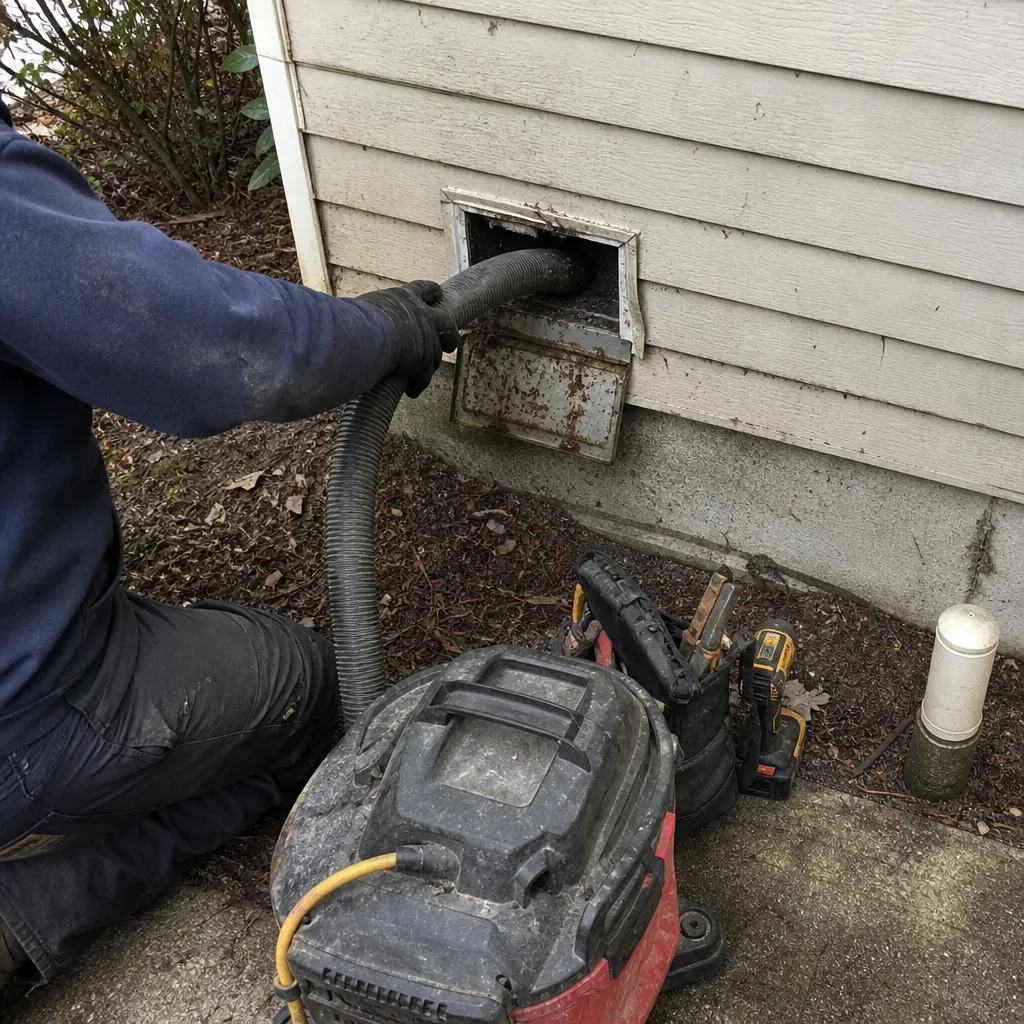 Before
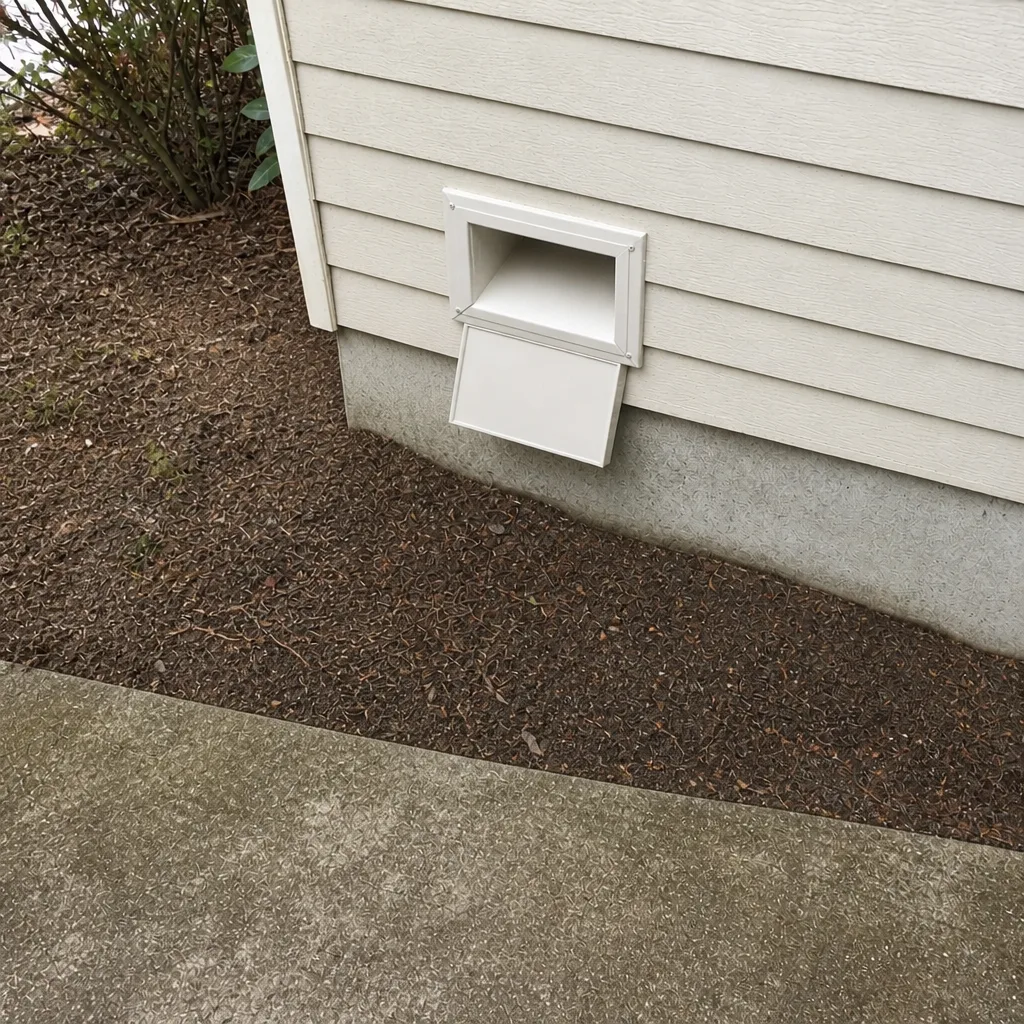 After
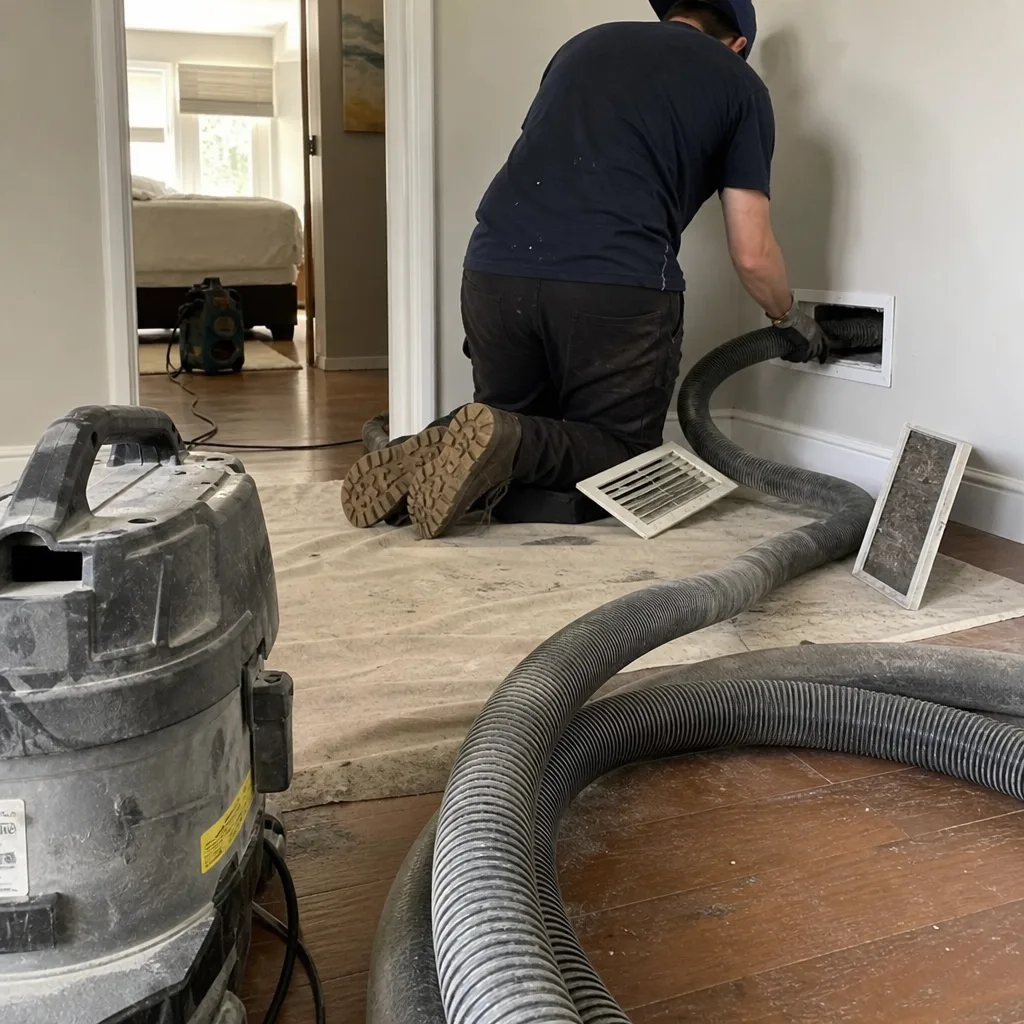 Before
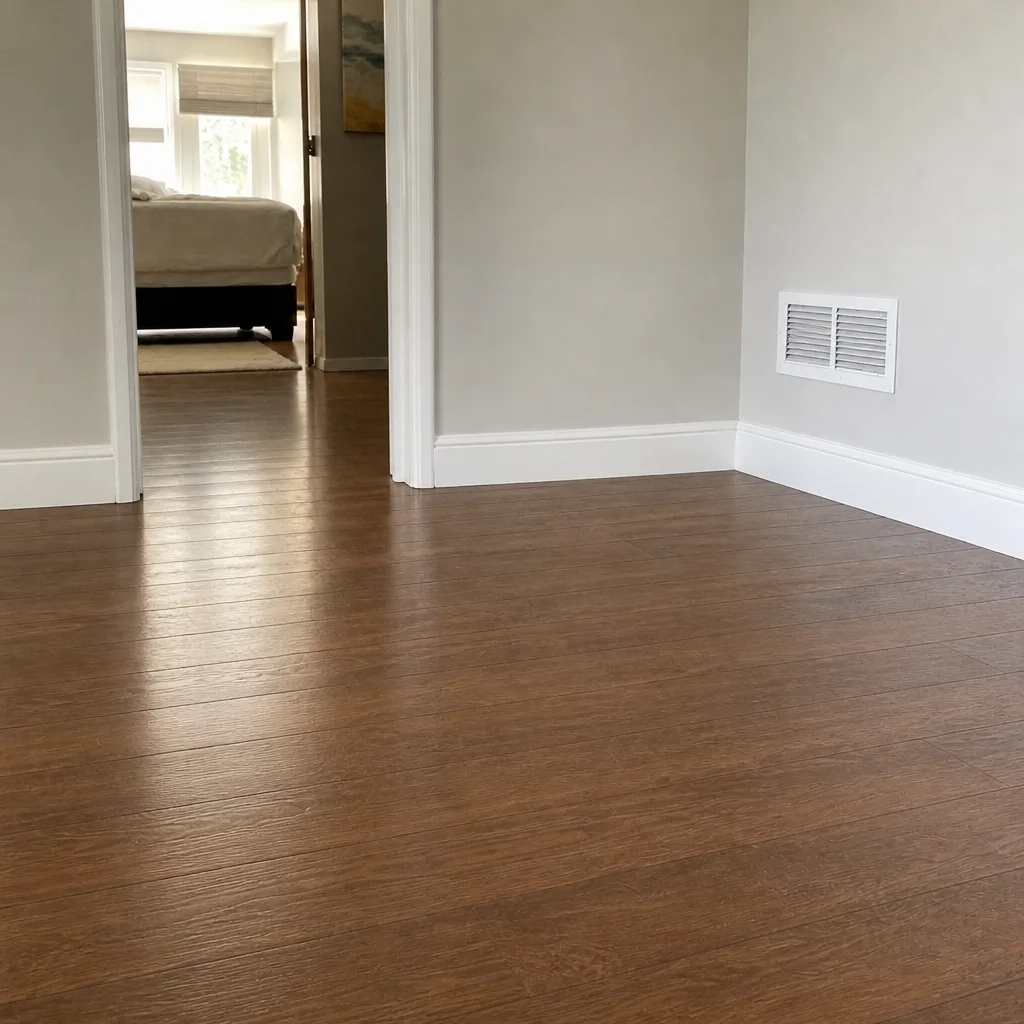 After
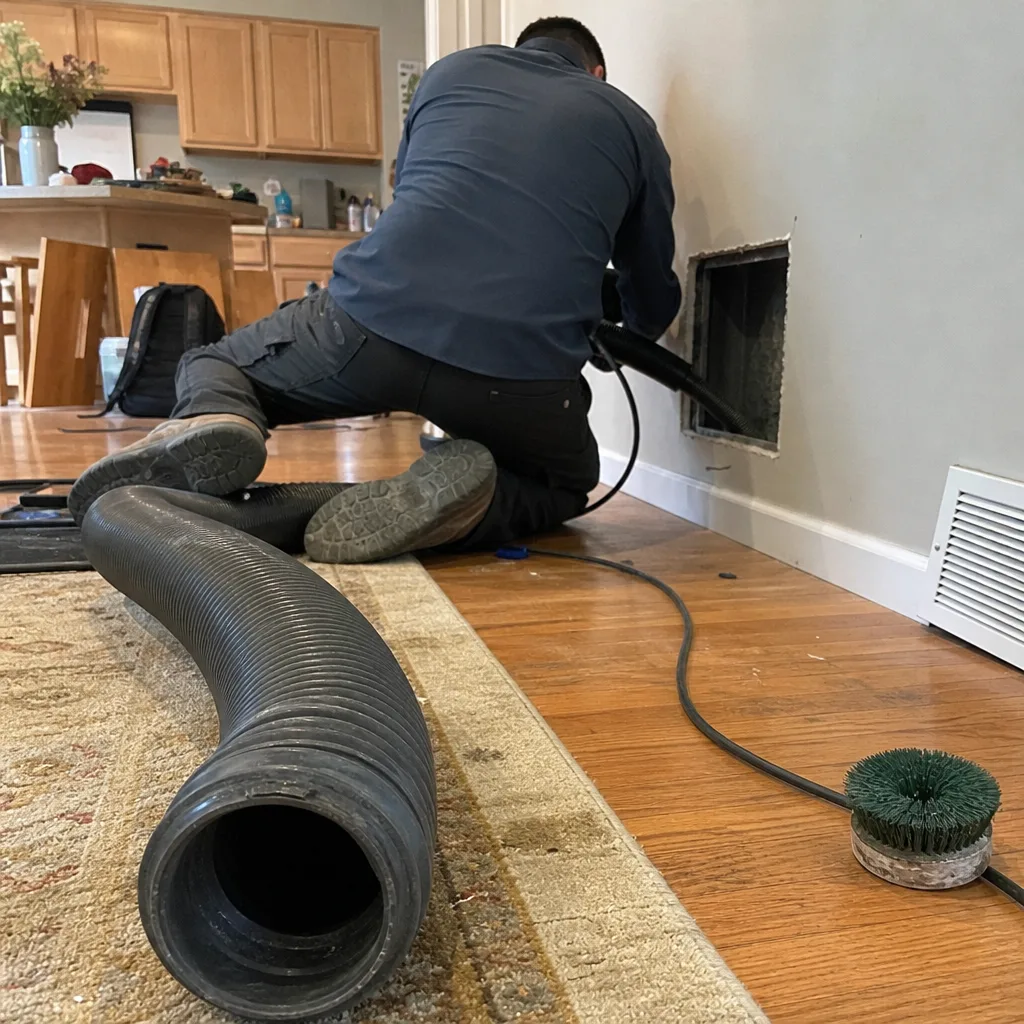 Before
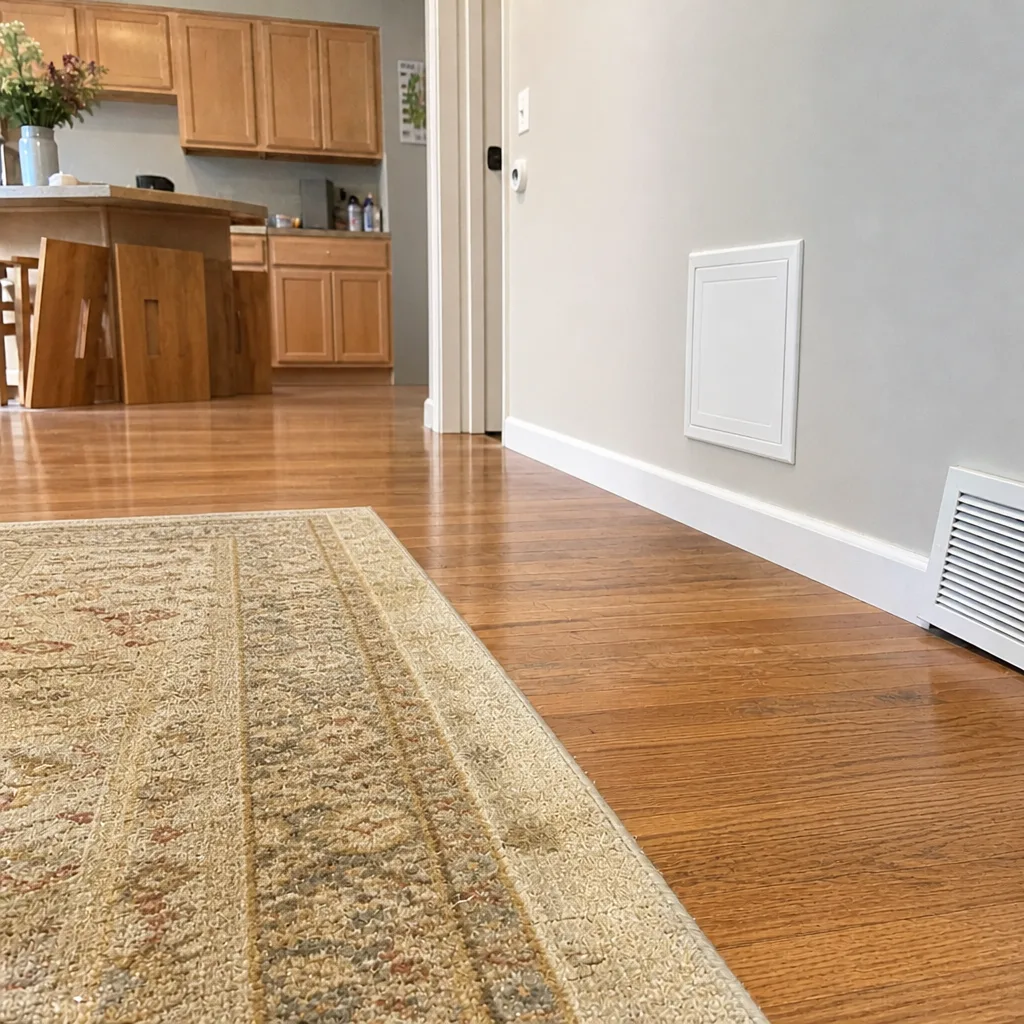 After
When to Call a Professional
Some duct issues are a five minute check. Others need a technician with a meter. Call a professional if: airflow drops noticeably in one or more rooms and stays that way, you smell a musty or chemical odor you can’t trace to a source inside the room, your dryer takes longer and the outside vent flap barely moves, you see visible dust streaks at the boots and register frames after a cleaning, or you suspect duct work was done during a remodel without a proper inspection afterward. Those are the scenarios where a measurement answers the question quickly and a guess costs more later. Kent Air Duct Cleaning Pros offers free estimates in Kent – call (855) 550-7709. We answer 24/7. Fast dispatch from 7am to 7pm, Sunday through Friday.
Frequently Asked Questions
Weak airflow in one room is most often a crushed or disconnected flex duct feeding that branch, or a register blocked by furniture or a closed damper. Less often, it’s an undersized return or a branch that simply gets less air than its dampers allow. The fix is different in each case, so the first step is a static pressure and airflow reading at that register and at the trunk. Call (855) 550-7709 for a free estimate – estimates are free.
A musty smell after cleaning usually means the sanitizing step was skipped, or the ducts weren’t fully dried before the system restarted. Damp ducts in Kent’s wet months give microbial growth a place to start, and the smell returns within weeks. The fix is a moisture check, a full dry cycle and a sanitizing treatment. Call (855) 550-7709 to schedule an assessment.
For most Kent homes, every few years is reasonable, sooner if you’ve had a remodel, a pest issue, visible dust streaks at the vents, or a moisture problem in the ducts. Homes with pets, allergies or recent construction usually benefit from more frequent inspections. There’s no fixed schedule that fits every house – the honest answer depends on what’s inside the ducts, not the calendar. Call (855) 550-7709 and we’ll walk through it.
Sometimes, but the cause matters. Uneven temperatures come from either a balancing problem (dampers set wrong, one branch getting too much air) or a leakage problem (conditioned air escaping before it reaches the room). Cleaning alone fixes neither. Sealing or rebalancing does. That’s why a technician should test both before recommending a fix. Call (855) 550-7709 for a diagnostic visit.
Ask for the readings. Static pressure, airflow at each register, and a leakage check at the joints – before and after – are what separate verified work from assumed work. Before-and-after photos of your own ducts are also fair to request. If a company can’t show you either, that’s your answer. Call (855) 550-7709 to book a visit with documented readings.
Yes. A dryer that’s running is not the same as a dryer that’s safe. Lint buildup in the vent is a leading cause of residential fires, and the problem builds silently – the dryer still works while the vent gets more restricted. A dedicated dryer vent cleaning checks the run, clears the lint, and confirms the outside flap opens fully. Call (855) 550-7709 to schedule one.
The Bottom Line
Most duct problems in Kent trace back to five fixable causes: crushed duct, blocked registers, undersized returns, leakage, or imbalance. The symptoms narrow the diagnosis – one weak vent versus all weak vents, a smell that gets worse versus one that fades, a cold room on one side of the house versus scattered. The difference between a repair that lasts and one that comes back next season is measurement: static pressure, airflow and leakage readings before and after, with the ducts dried properly in between. If you want the source fixed instead of the symptom managed, that’s the work we do. Our technicians have up to 13 years of experience, and we carry the full scope – cleaning, sealing, sanitizing, and dryer vent work – under one roof. If you’re starting fresh with a full assessment, start at Kent Air Duct Cleaning Pros.
Ready to get the ducts mapped and measured instead of guessed at? Call (855) 550-7709 for a free estimate. We answer 24/7. Fast dispatch from 7am to 7pm, Sunday through Friday.
Written by the team at Kent Air Duct Cleaning Pros.