
Last updated November 23, 2026
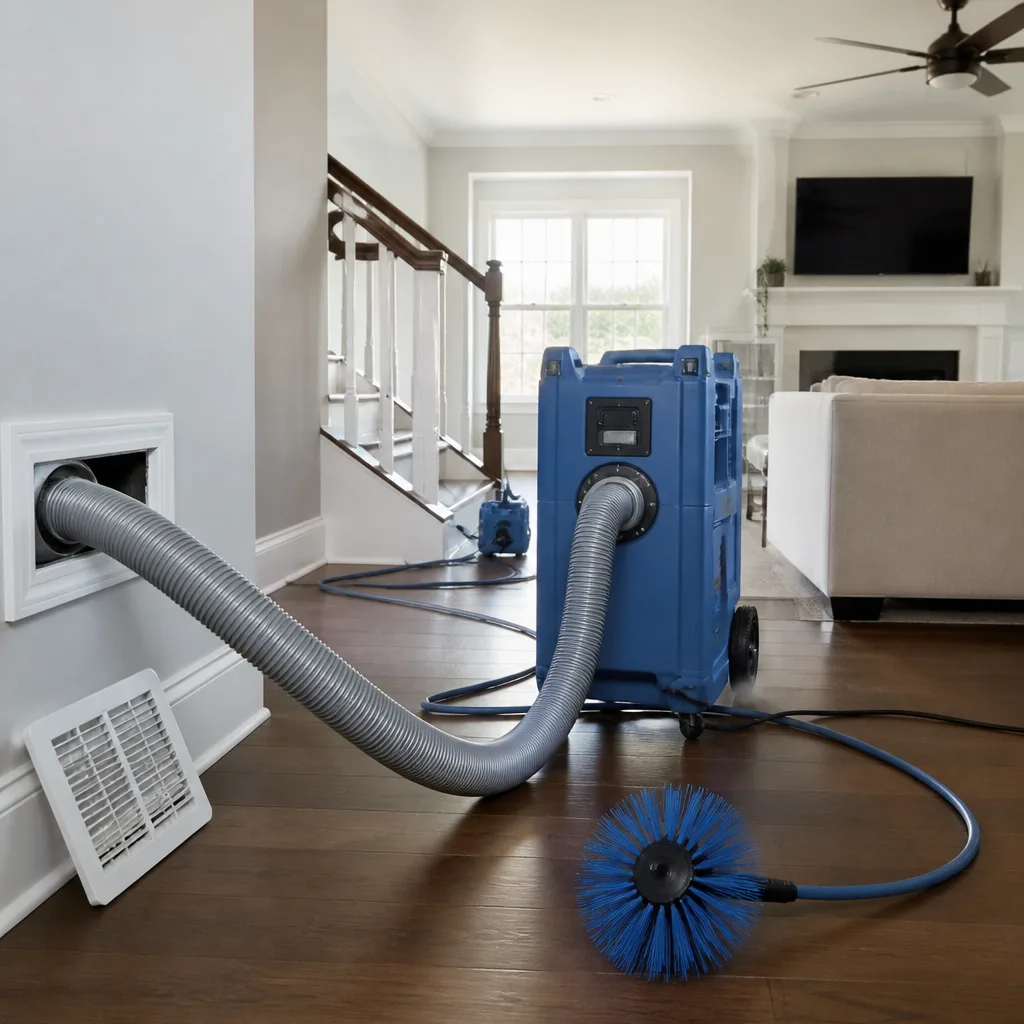 Whole-home duct cleaning
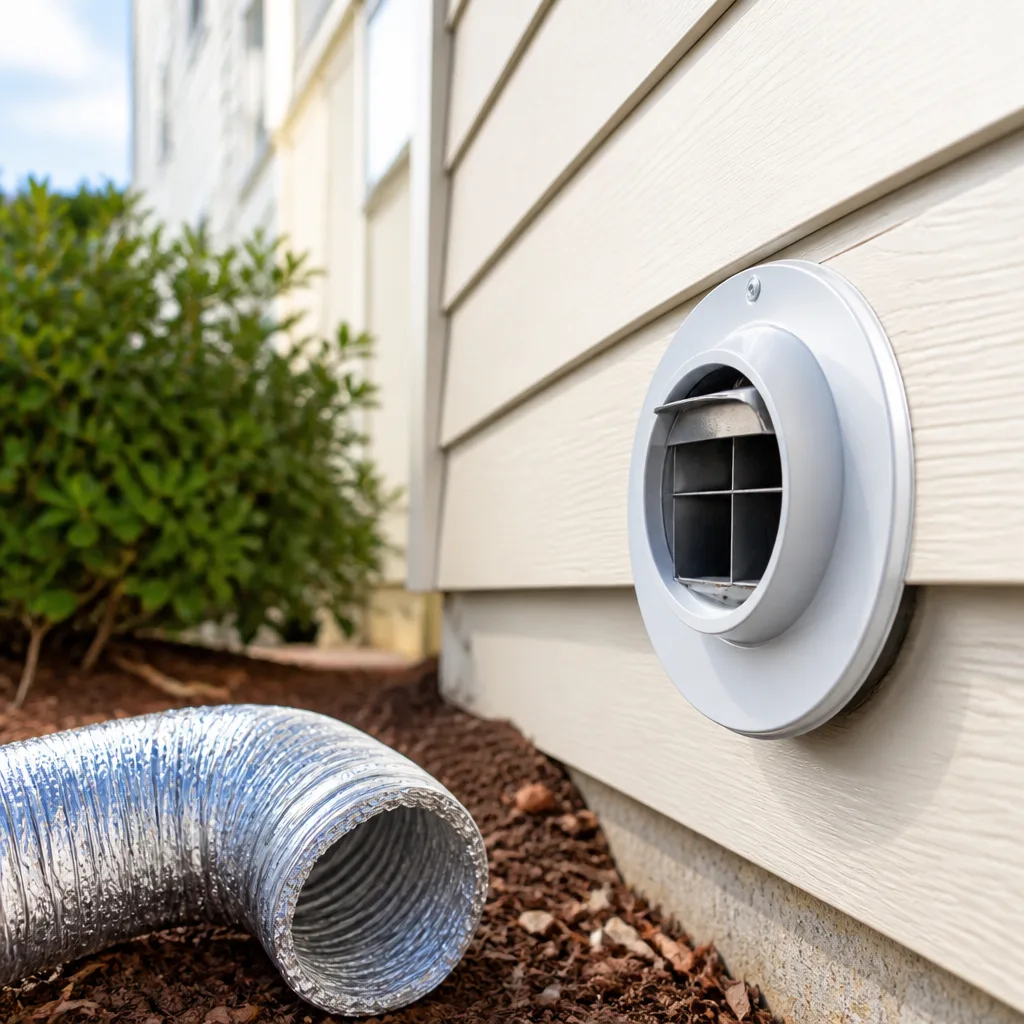 Dryer vent cleaning
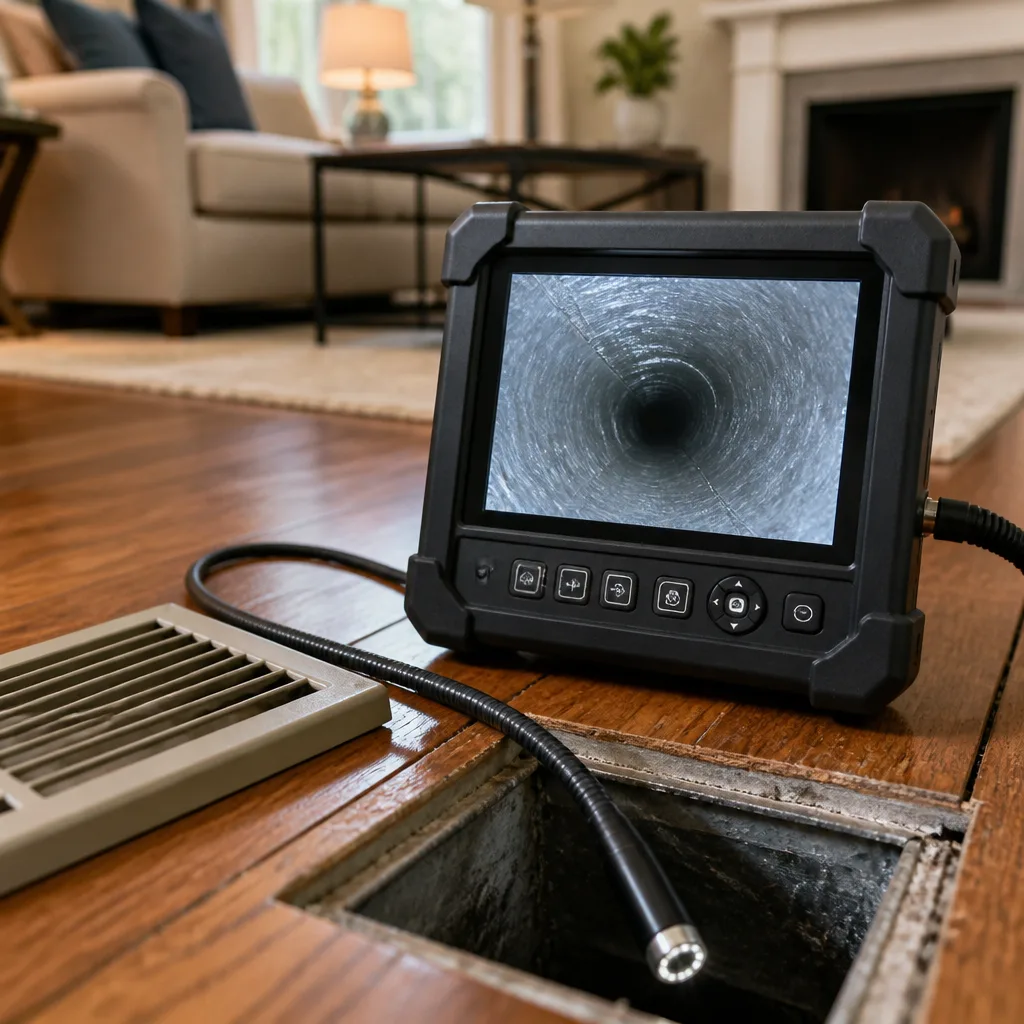 Camera inspection
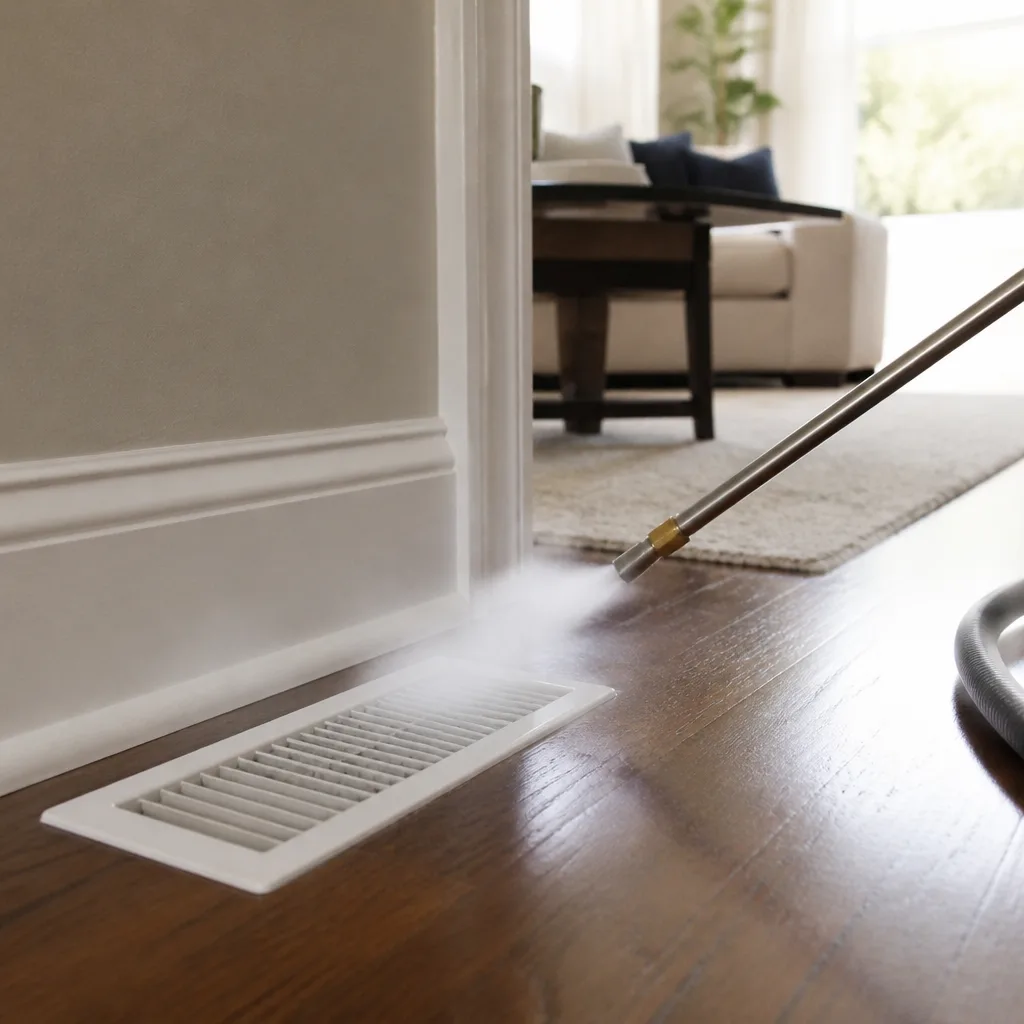 Sanitizing & deodorizing
Whole-system duct and dryer vent check with before-and-after photos - you see exactly what came out of your vents
That "$99 whole-house special" is a bait ad - the real number appears once they are in your hallway, or the "clean" is a shop-vac at the register. We photograph the inside of your ducts before and after instead.
Choosing the Right Air Duct Cleaning Brand: A Buyer’s Guide for Kent
Three of the top five nationally recognized duct cleaning franchise brands operate with the same portable vacuum equipment as an independent one-van operation. The franchise fee funds a call center and a logo, not a truck-mount unit. That’s the uncomfortable truth about brand recognition in this trade: the name on the invoice tells you almost nothing about what’s actually attached to the hose. What matters is equipment specification, containment method, and whether the person running the machine knows what they’re looking at inside your walls. This guide gives Kent homeowners a way to evaluate any operator, franchise or independent, using the same checklist. You’ll learn what the equipment benchmarks mean, how franchise structures affect service in practice, and how a ten-minute phone call can disqualify the wrong company before they ever pull into your driveway.
Quick Answer
To choose the right air duct cleaning brand in Kent, ignore name recognition and verify four things instead: a truck-mount or high-CFM vacuum with HEPA filtration, negative air pressure containment during the job, an inspection camera to document what’s inside the ducts, and a technician who can explain the method before quoting. Ask for before-and-after photos of your own system, not stock images.
Styles & brands we work with
- Whole-home duct cleaning
- Dryer vent cleaning
- Camera inspection
- Sanitizing & deodorizing
Table of Contents
- What does “brand” actually mean in air duct cleaning?
- How do national franchise structures affect service quality?
- The equipment benchmarks that separate capable operators from underpowered ones
- Why well-equipped local operators often outperform franchises in Kent
- The 10-minute pre-booking phone call that disqualifies operators
- A step-by-step walkthrough of a properly run Kent duct cleaning job
- How to verify the work was actually done
- What Kent’s climate and housing stock mean for duct contamination
What Does “Brand” Actually Mean in Air Duct Cleaning?
In most service industries, a brand is a proxy for consistent standards. In duct cleaning, it’s closer to a marketing wrapper. A franchise brand licenses a name and a playbook to local operators who may or may not follow it. An independent local brand is whatever the owner decides to invest in. Neither structure guarantees a specific piece of equipment on the truck, and that equipment is the whole ballgame.
Here’s the practical problem. Duct cleaning has no single national licensing body that enforces equipment standards. A company can legally operate with a portable shop-style vacuum and a spinning brush, and many do. The name on the van doesn’t change that. What changes it is whether the operator invested in purpose-built machinery like a Rotobrush or Nikro system, and whether they run an Abatement Technologies negative air machine to keep contaminants contained while the ducts are opened up.
So when you evaluate a company in Kent, you’re not really evaluating a brand. You’re evaluating a spec sheet and a person. That’s a more useful frame, and it cuts through the noise that franchise marketing creates. The next sections break down exactly what to look for, starting with how national franchise structures actually function on the ground.
How Do National Franchise Structures Affect Service Quality?
A national duct cleaning franchise sells a territory to a local owner. That owner agrees to use the brand name and follow certain operating guidelines. In practice, the franchise agreement governs marketing, pricing menus, and call-center scripts far more than it governs which vacuum the owner buys or how much training each technician receives. That gap is where inconsistency lives.
Three things vary most across franchise locations:
- Equipment standards. The franchise may recommend equipment without requiring a specific model or CFM rating. One location might run a truck-mount HEPA system; another might run portable units because they’re cheaper to start with.
- Technician training. Training often happens at the local level. A well-run franchise location trains thoroughly; a poorly run one sends technicians out after minimal onboarding. The brand name hides the difference.
- Upsell pressure. Franchise business models often rely on standardized add-on menus (sanitizers, deodorizers, sealants) sold at the door. That structure can push technicians toward selling rather than diagnosing what your system actually needs.
None of this means every franchise is bad. Some franchise locations are excellent, and some independents are terrible. The point is that brand recognition doesn’t predict which is which. A homeowner in Kent is better served by asking the same verification questions of every company, franchise or not. That’s the only reliable way to separate a properly equipped operator from a logo with a vacuum behind it.
The Equipment Benchmarks That Separate Capable Operators
This is the section worth reading twice. Equipment is the clearest, most objective signal of whether a duct cleaning company can do a real job. You can ask about these specs on the phone, and the answers tell you a lot before anyone shows up.
Here are the benchmarks that matter most:
- Airflow (CFM). CFM measures how much air the vacuum moves per minute. Underpowered portable units can’t create enough negative pressure to pull debris loose from the full length of a trunk line. Truck-mount and high-CFM portable systems do. Ask what the machine’s CFM rating is; a company that can’t answer is a company that didn’t buy equipment with a spec sheet.
- HEPA filtration. A HEPA filter traps fine particulate before it re-enters your home’s air. Without it, cleaning can stir up dust and allergens rather than remove them. Rotobrush and Nikro systems are built around HEPA-level containment for exactly this reason.
- Negative air pressure. An Abatement Technologies unit pulls the duct system into negative pressure while it’s opened, so dislodged contaminants travel toward the machine instead of into your living room. This is standard practice for commercial and industrial contractors, and it’s the single biggest safeguard during cleaning.
- Inspection camera capability. A camera lets the technician see inside the ducts before and after cleaning and document blockages, disconnected runs, or pest intrusion. A company without one is working blind.
- Duct repair and sealing support. A properly equipped operator can seal what they find. If the answer to “can you fix a leak you find?” is “we’d have to refer that out,” you’re dealing with a partial-service operation.
The professional-grade equipment brands tell you a lot here. Rotobrush and Nikro manufacture purpose-built duct cleaning machinery, not repurposed shop vacuums. Abatement Technologies builds the containment equipment used on commercial projects. When a Kent company runs those systems, they’ve crossed from “someone with a vacuum” into “an operator with real capability.”
Why Well-Equipped Local Operators Often Outperform Franchises in Kent
A local operator with proper equipment has three structural advantages in Kent that a franchise location can’t easily match. First, response time. A local operator isn’t routing calls through a national dispatch center two time zones away; the person answering the phone is close enough to schedule a Kent job directly. Second, system familiarity. Duct systems in Kent’s older neighborhoods and its newer subdivisions behave differently. A local operator who cleans ducts across the area regularly recognizes what’s common for local housing stock, whether that’s older galvanized runs or newer flex duct installed on modern builds. Third, no franchise upsell pressure.
That third point deserves a hard look, because it’s where franchise and local operators diverge most in the customer’s interest. When an operator’s business model centers on standardized add-on sales, the diagnosis can get shaped to fit the menu. A local operator running as an independent business has more freedom to say “your system doesn’t need a sanitizer, it needs a sealing repair on this one run.” That’s a smaller invoice, but it’s the correct one.
None of this is a knock on national brands as employers or as businesses. It’s an observation about incentives. If you’re a property manager or homeowner in Kent looking for verified work rather than a familiar logo, the operator who can show you their equipment specs and explain the diagnostic process has already told you most of what you need to know. The brand name is the least informative part of the quote.
The 10-Minute Pre-Booking Phone Call That Disqualifies Operators
You can save yourself a bad appointment with a phone call. Use these questions, in this order, and listen carefully to the answers. A qualified operator answers them directly; a marketing operation deflects or transfers you.
- “What cleaning equipment do you run?” Qualified answer: a named system like Rotobrush or Nikro, or a truck-mount vacuum with a CFM figure. Disqualifying answer: “a high-powered vacuum” with no model, or a mumble.
- “Do you use HEPA filtration and negative air pressure during the job?” Qualified answer: yes, with some explanation. Disqualifying answer: “we don’t need that for residential.”
- “Will you photograph the inside of my ducts before and after?” Qualified answer: yes, and they use an inspection camera. Disqualifying answer: “it’s not really visible.”
- “Can you repair and seal a duct if you find a leak?” Qualified answer: yes, in-house during the same visit. Disqualifying answer: “we can recommend someone.”
- “How do you price the job?” Qualified answer: a flat price per system, set by a written estimate. Disqualifying answer: per-vent pricing or a low teaser figure that turns into a bigger number on site.
- “Can you clean the dryer vent too, and do you treat it as its own service?” Qualified answer: yes, as a dedicated fire-prevention service. Disqualifying answer: “we’ll blow it out while we’re there.”
Five minutes of these questions tells you more than an hour of review reading. If a company can’t answer them, no brand name makes them ready for your Kent home.
A Step-by-Step Walkthrough of a Properly Run Kent Duct Cleaning Job
Knowing what a correct job looks like protects you from the shortcut version. This is the sequence a well-equipped operator should follow, in outline. Notice how much of it happens before the cleaning itself.
- System assessment. The technician walks the home, locates every supply and return register, checks the air handler, and confirms duct routing. They ask about symptoms (dust, allergies, airflow) and note anything that needs a closer look.
- Camera inspection. An inspection camera goes into the system to document current conditions: debris type, disconnected runs, rodent or pest evidence, moisture. This is the diagnosis, and it should be discussed with you before cleaning.
- Containment setup. The vacuum connects to the main trunk, HEPA filtration is engaged, and negative air pressure is established. Registers get covered. The goal is to pull the whole system under pressure so dislodged material flows toward the machine.
- Cleaning. Rotobrush or Nikro tools work through each run, breaking loose debris and pulling it into containment. Every supply and return gets attention; a cleaning that skips runs is a partial job.
- Repair and sealing. If the inspection found leaks, disconnected joints, or failing seals, the technician repairs and seals them now, in the same visit. Duct problems are fixed on the spot, not documented and referred out.
- HVAC cleaning. The air handler, blower, and coil area are cleaned so the system that pushes air through the ducts isn’t reintroducing debris.
- Post-clean verification. The camera goes back in. Before-and-after photos of your own system get reviewed with you. This is the evidence standard.
That’s the full-system approach: ducts, HVAC components, sealing, and verification, all inside one job. If you want to see how this fits with a scheduled cleaning, look at air duct cleaning and read how the sequence runs in Kent homes.
How Do I Know the Work Was Actually Done?
Ask for photographic proof of your own system, taken before and after. A company that documents the inside of your ducts with an inspection camera can show you exactly what changed. A company that can’t show you anything beyond a clean-looking register cover is asking you to take it on faith, and faith isn’t verification.
The standard of proof has four parts:
- Photos of your ducts, not stock images. They should show your specific system’s interior at the start and the end. Generic marketing photos prove nothing.
- Camera footage. A short clip walking through the main trunk before and after cleaning is stronger than a still image, because it confirms the whole run, not one cleaned segment.
- Written documentation of repairs. If a leak was found and sealed, you should know where it was and what was done. A sealed joint can be photographed.
- Clear scope before the work starts. The estimate should state exactly what’s included: which components, which services, one flat price per system. That way you can verify against a written standard, not a verbal one.
This is also why before-and-after documentation matters for the dryer vent. The vent is a fire-safety system, and a photo of the vent run after clearing is direct evidence that the hazard path is clear. If a company treats it as an afterthought, ask why. Our dryer vent cleaning service is a dedicated line of work, not an add-on.
What Kent’s Climate and Housing Mean for Duct Contamination
Kent sits in a climate with real seasonal swings: damp, cool stretches through the wetter months and warmer, drier summers. That pattern matters for ducts. Moisture-laden air and temperature swings create condensation conditions in poorly sealed duct systems, especially in unconditioned spaces like attics and crawl spaces. Condensation supports mold and mildew growth inside the ducts, and it’s invisible from the register.
Kent’s housing stock adds a second variable. Older homes may have original ductwork with failing tape seams, loose joints, and galvanized runs that have accumulated decades of dust, along with more opportunities for leakage than newer builds. Newer homes often use flex duct, which can sag, kink, or come detached from a register boot and quietly dump conditioned air into a crawl space. Both scenarios mean the same conclusion: what’s inside the walls needs inspecting, not guessing.
Homeowners who notice uneven room temperatures, more dust on surfaces after a system cycle, or allergy symptoms that flare when the heat or A/C runs are seeing duct symptoms. That doesn’t automatically mean a cleaning is needed, but it does mean an inspection with a camera makes sense. When the inspection finds leaks or disconnected runs, repair and sealing should be part of the response, not a separate referral. And if the response also involves a system-wide air quality component, our HVAC cleaning service addresses the equipment side so the ducts aren’t the only system being neglected.
Common Mistakes to Avoid
- Choosing on brand name alone. A familiar logo tells you nothing about the vacuum or the technician’s training. Ask about equipment and method, and treat brand recognition as the last data point, not the first.
- Accepting a per-vent price. A low quote per vent can balloon once the technician is on site. Insist on a flat price for the whole system, set in writing before work starts.
- Skipping the before-and-after photos. Without documentation, you have no way to know what was actually cleaned. Ask for photos of your own ducts, before and after.
- Ignoring the dryer vent. The dryer vent is a leading cause of residential fires, and many duct cleaners treat it as a checkbox. It deserves its own dedicated service with its own cleaning.
- Letting a duct issue go unrepaired. A disconnected run or failed seal found during inspection and left alone means the system keeps leaking. Repair and sealing should happen in the same visit, not be referred out.
- Hiring on the cheapest bid. The budget bid usually means underpowered equipment and skipped containment. Cheap in this trade is often a shortcut, not a discount.
- Overlooking the HVAC unit itself. Cleaning the ducts while the air handler and coil stay dirty reintroduces the same contamination. Ask whether HVAC cleaning is included or available.
See the difference
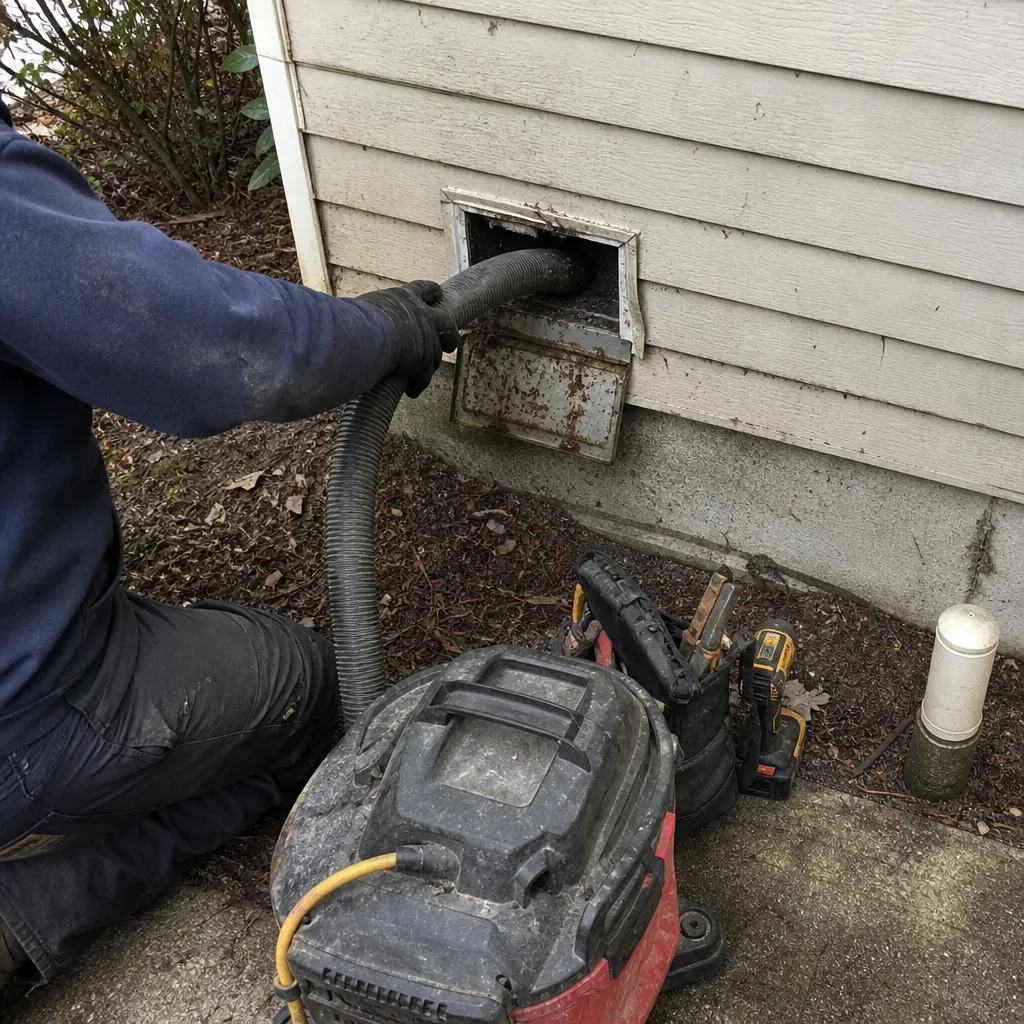 Before
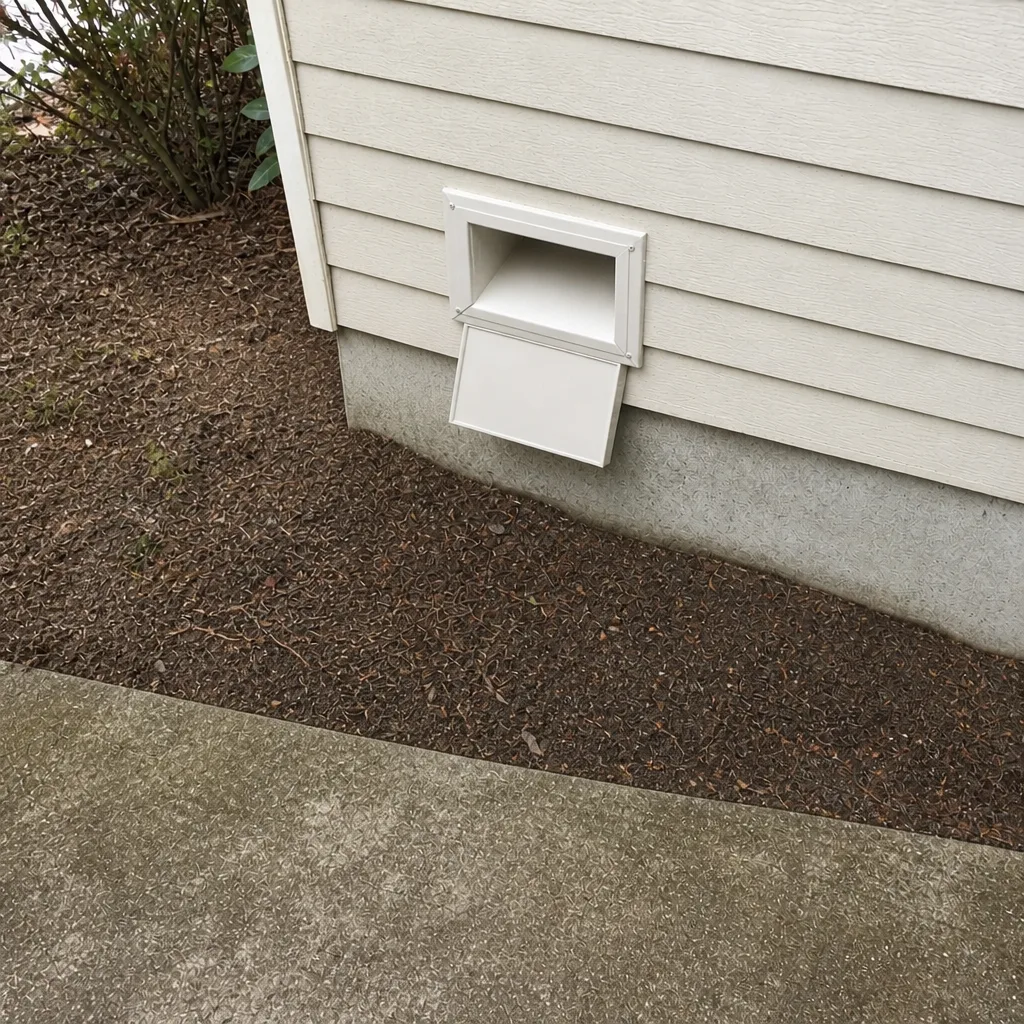 After
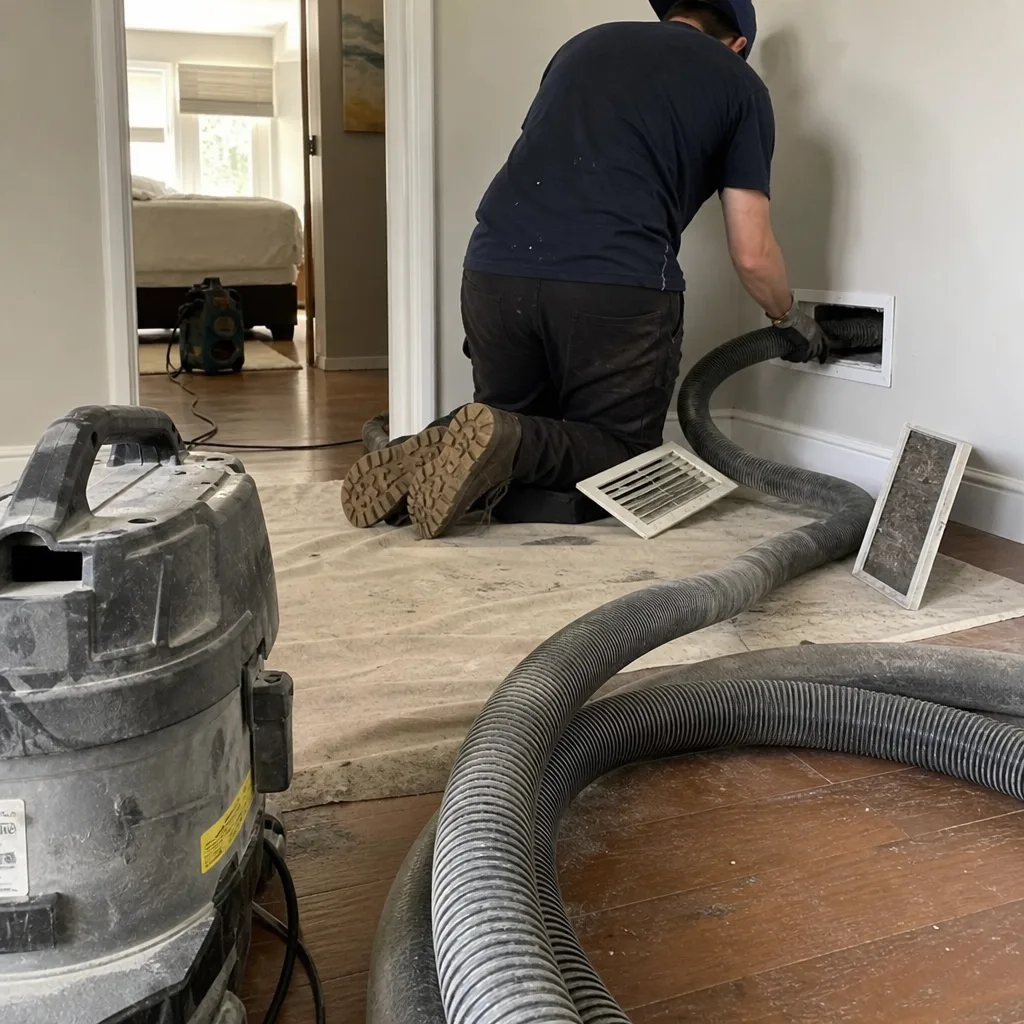 Before
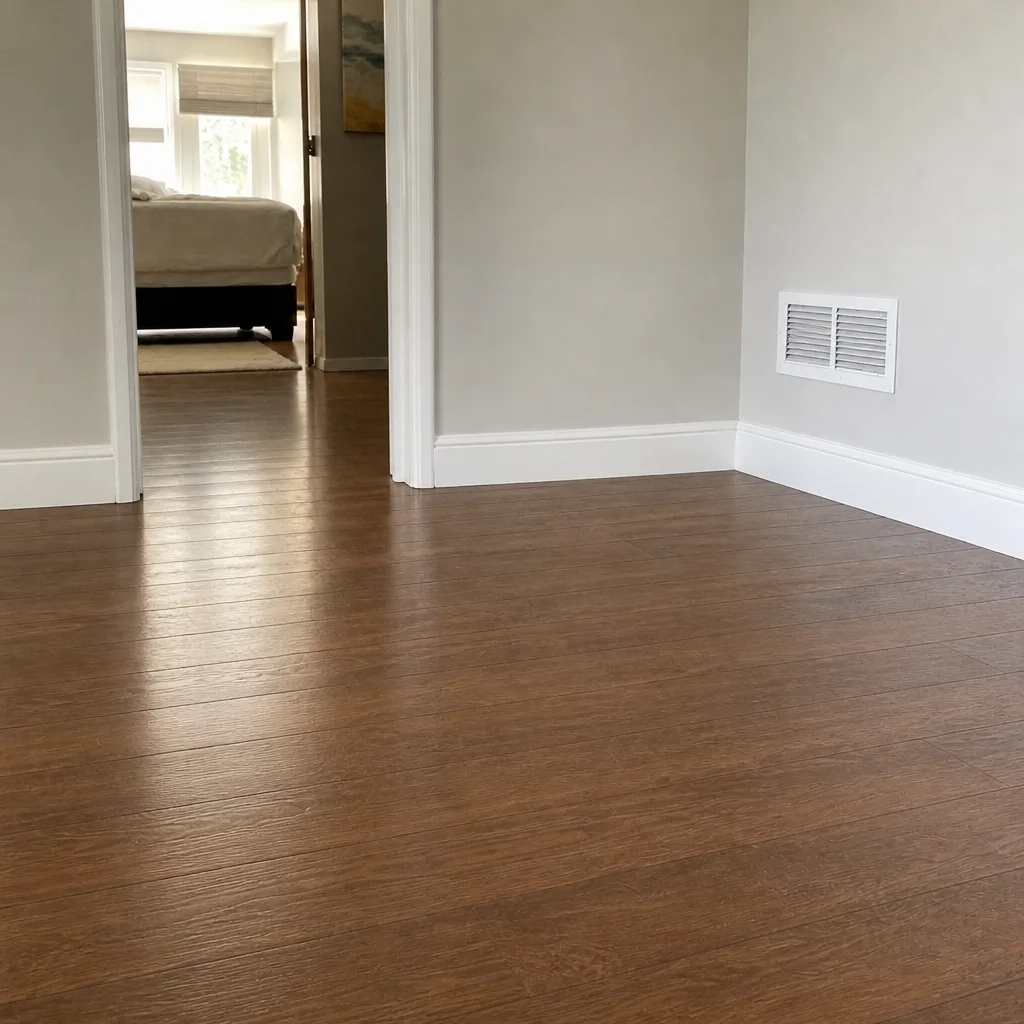 After
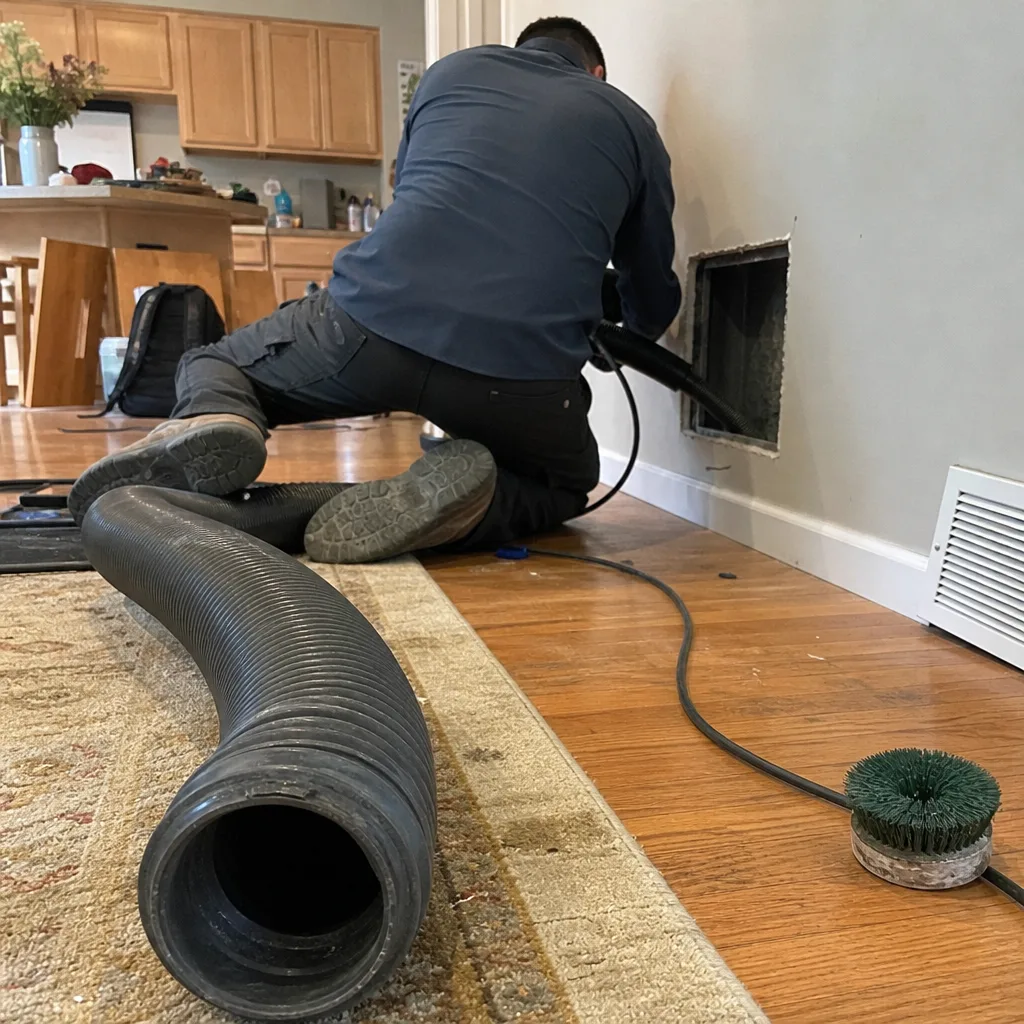 Before
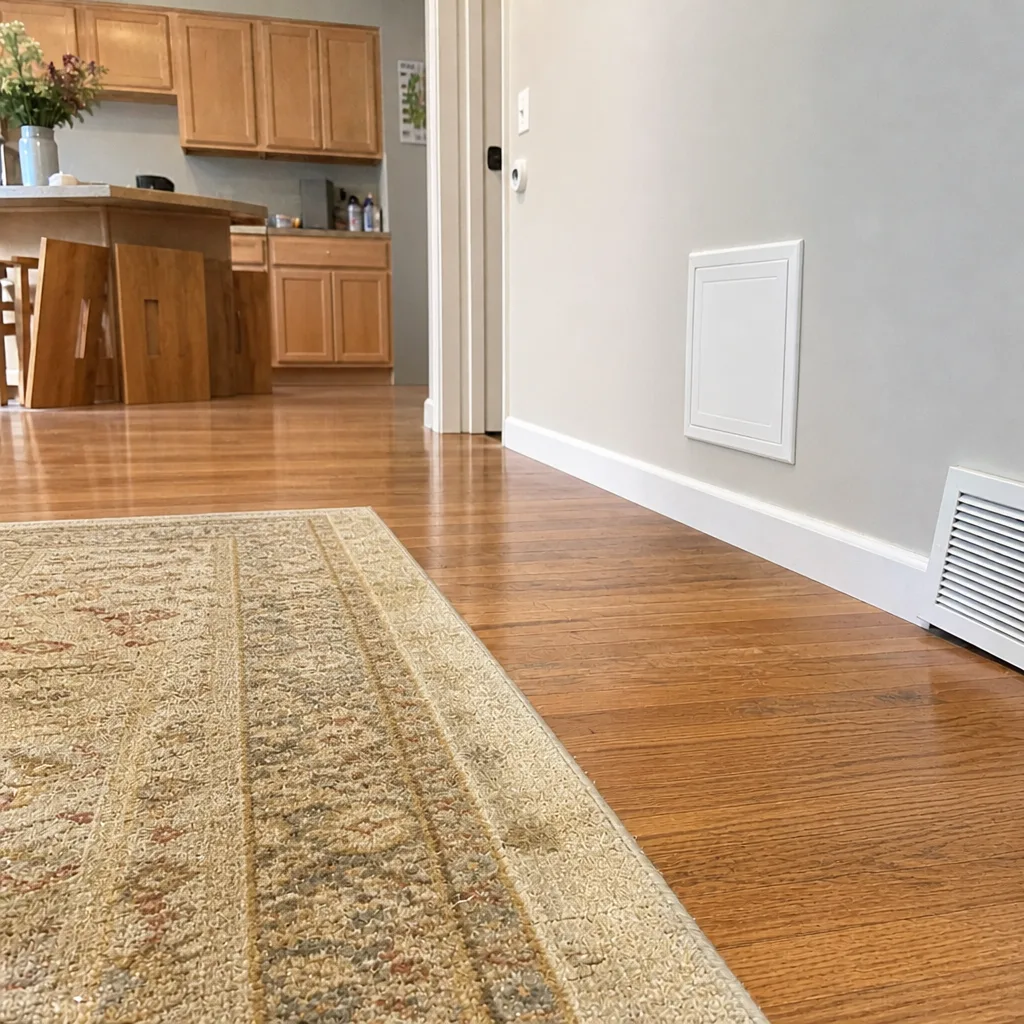 After
When to Call a Professional
Some signs clearly point to a professional inspection rather than a wait-and-see. Call when you see visible dust or debris coming out of registers after the system runs, when rooms aren’t heating or cooling evenly, when there’s a musty or stale smell that appears only when the HVAC cycles, or when someone in the home has respiratory or allergy symptoms that flare when the system runs. Call when the dryer takes much longer than usual to dry a load, or when the outside vent flap doesn’t open or is clogged with lint. Call when you’re moving into a Kent home with unknown duct history, or when a property manager needs a full system verified between tenants. In each case, a camera inspection comes first and the job scope follows the findings. Kent Air Duct Cleaning Pros offers free estimates in Kent. Call (855) 550-7709. We answer 24/7. Fast dispatch from 7am to 7pm, Sunday through Friday.
Frequently Asked Questions
Prices in the Kent market vary by system size and what the job requires, so a proper quote comes from an on-site assessment and a written estimate. Rather than publish a teaser figure, a professional-grade operator prices one flat amount per system after inspection. What protects you is a written estimate that sets the final price before work begins. Call (855) 550-7709 for a free estimate.
Cheap quotes usually cut scope, not price. They commonly mean portable equipment instead of a high-CFM system, no HEPA filtration, no negative air containment, or per-vent pricing that grows on site. A low figure often turns into a larger invoice once the technician is inside. A written flat price per system with clear scope is the honest comparison. Call (855) 550-7709 for an exact quote.
There’s no universal rule; the schedule depends on your home, your system, and what the inspection finds. Homes with pets, allergies in the household, recent renovation dust, or visible debris at registers tend to need attention sooner. The camera inspection is what sets the interval, not a marketing calendar. Call (855) 550-7709 and we’ll help you figure out where your system stands.
Ask for before-and-after photos of your own duct system, backed by camera footage of the runs. Documentation of any repairs, like sealed joints, should be included. A company that can show the interior of your system before and after has proven the work; a company that can’t is asking you to trust them. Call (855) 550-7709 for a free estimate with documentation included.
No. Reliability comes from equipment specification, containment method, and technician training, not from a brand name. A local operator running professional-grade machinery and documenting the job can deliver verified work regardless of the logo on the invoice. Use the same checklist on every company and let the answers decide. Call (855) 550-7709. We answer 24/7. Fast dispatch from 7am to 7pm, Sunday through Friday.
Only if repair and sealing are part of their scope. Some cleaners document problems and refer them out, which leaves your system leaking until someone else shows up. A full-system operator repairs and seals what they find during the same visit. Ask this before booking, because the answer separates a diagnostic visit from a resolution. Call (855) 550-7709 for a free estimate.
The Bottom Line
In duct cleaning, the brand on the invoice means far less than what’s attached to the hose. Evaluate every operator, franchise or local, on the same four benchmarks: high-CFM equipment with HEPA filtration, negative air containment, camera inspection with before-and-after photos, and an operator who can repair and seal what they find. In Kent, a well-equipped local operator often has the edge on response time and honest scope, without franchise upsell pressure. Use the phone-call checklist, ask about equipment by name, and insist on one flat price per system. For a free estimate with documentation included, see Kent Air Duct Cleaning Pros and get your system assessed properly. Call (855) 550-7709. We answer 24/7. Fast dispatch from 7am to 7pm, Sunday through Friday. Our technicians have up to 13 years of experience with professional-grade systems like Rotobrush, Nikro, and Abatement Technologies, and we work with Honeywell and Aprilaire product lines for air quality upgrades when your system needs them.
Written by the team at Kent Air Duct Cleaning Pros.